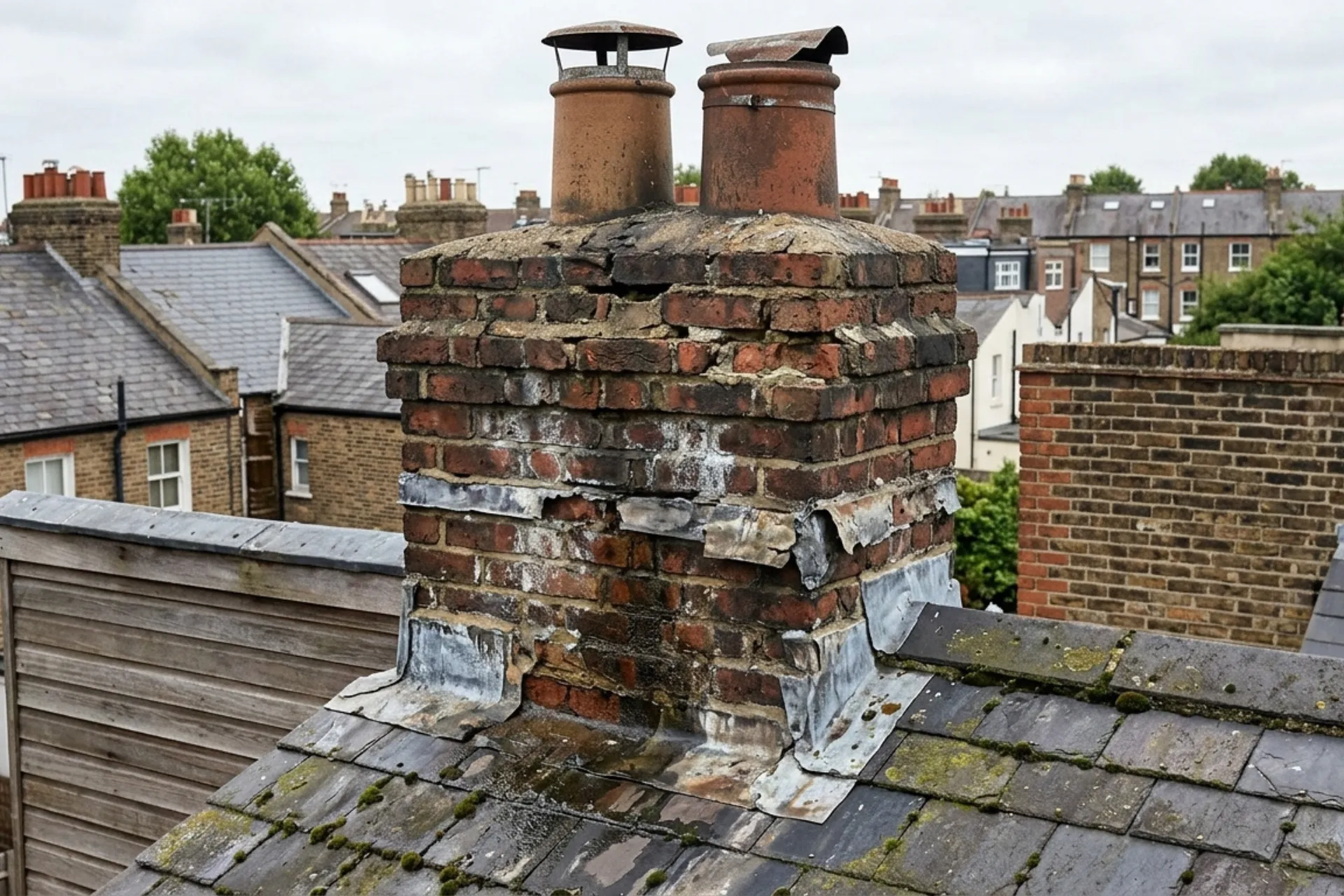
Why Is My Chimney Leaking When the Roof Looks Fine?
You’ve noticed a damp patch near the chimney breast, water staining on the ceiling or moisture appearing around an old fireplace. Yet when you look at the roof from outside, the tiles seem intact and nothing appears obviously broken.
It’s a frustrating situation, particularly when the damp keeps returning after heavy rain.
What many homeowners don’t realise is that a chimney can develop a water leak without any obvious damage to the surrounding roof tiles.
Rainwater may enter through small openings around the chimney stack, deteriorated weatherproofing details or defects that are difficult to see from ground level. In older properties, some apparent chimney leaks are not caused by rain at all. Condensation and moisture-absorbing salts inside an unused flue can produce similar staining.
The challenge is identifying where the moisture originates before paying for repairs that may not solve the problem.
This guide explains how to investigate the symptoms of a suspected chimney leak, what different damp patterns may indicate and when a professional inspection is needed.
Why a Chimney Can Leak Without Obvious Roof Damage
A roof can look perfectly normal from the street while hidden defects allow water into the building.
The chimney stack and the surrounding roof are separate but connected parts of the weatherproofing system.
The roof covering directs rainwater away, while flashing and other junction details prevent water passing through gaps where the chimney meets the roof.
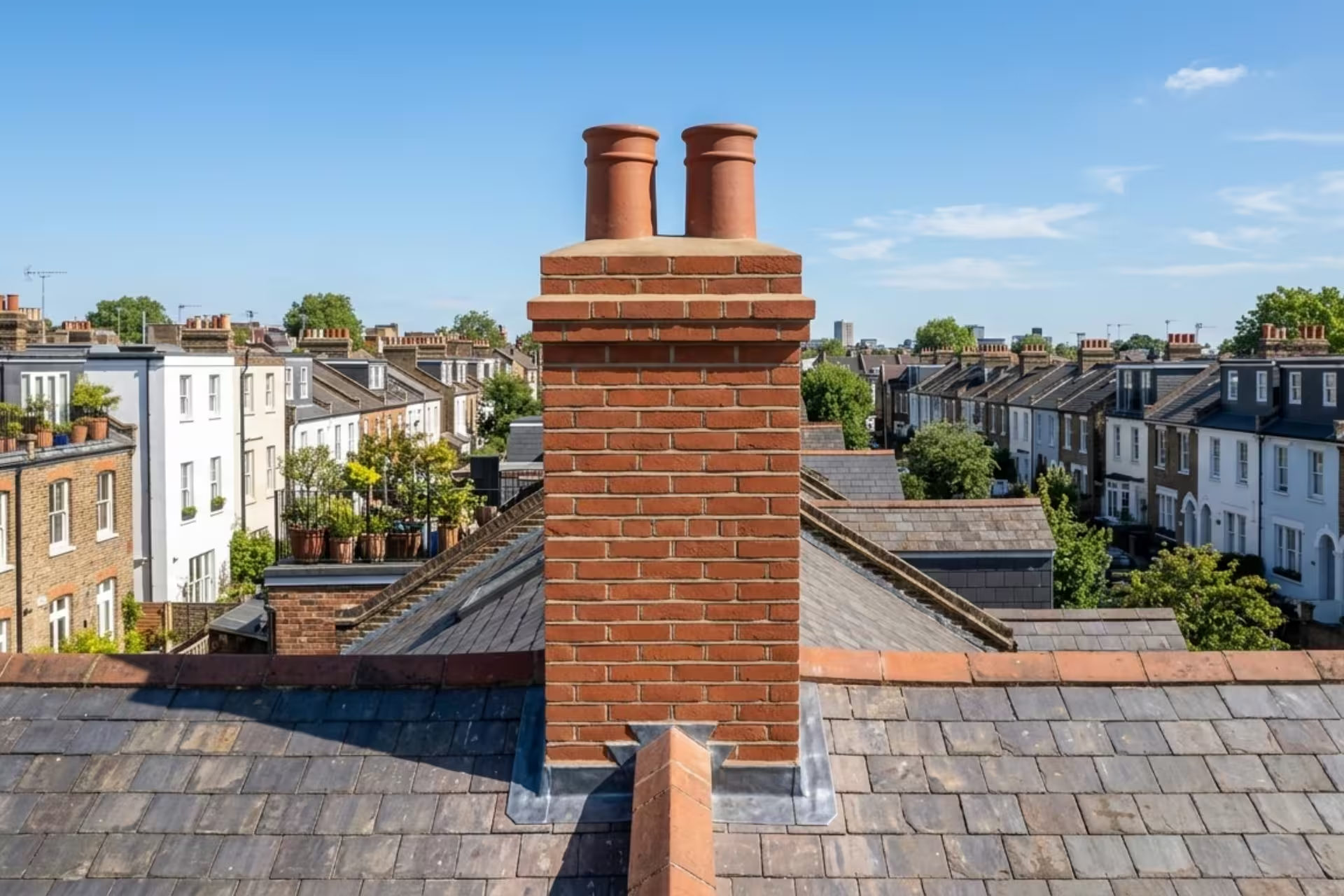
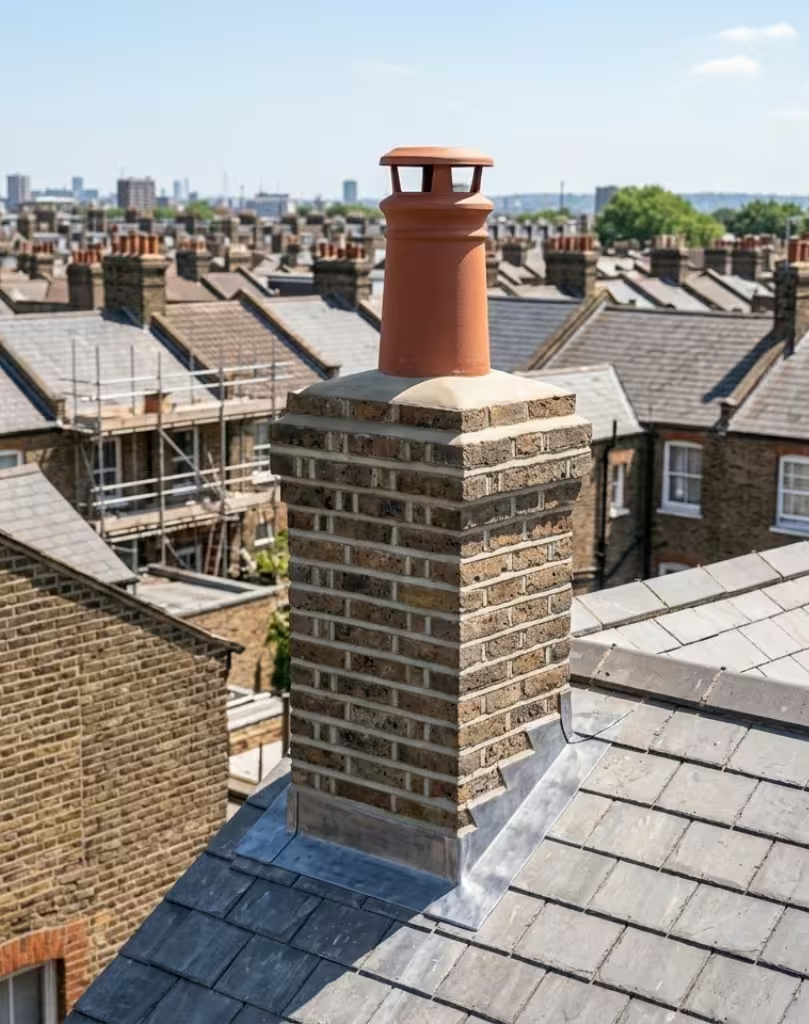
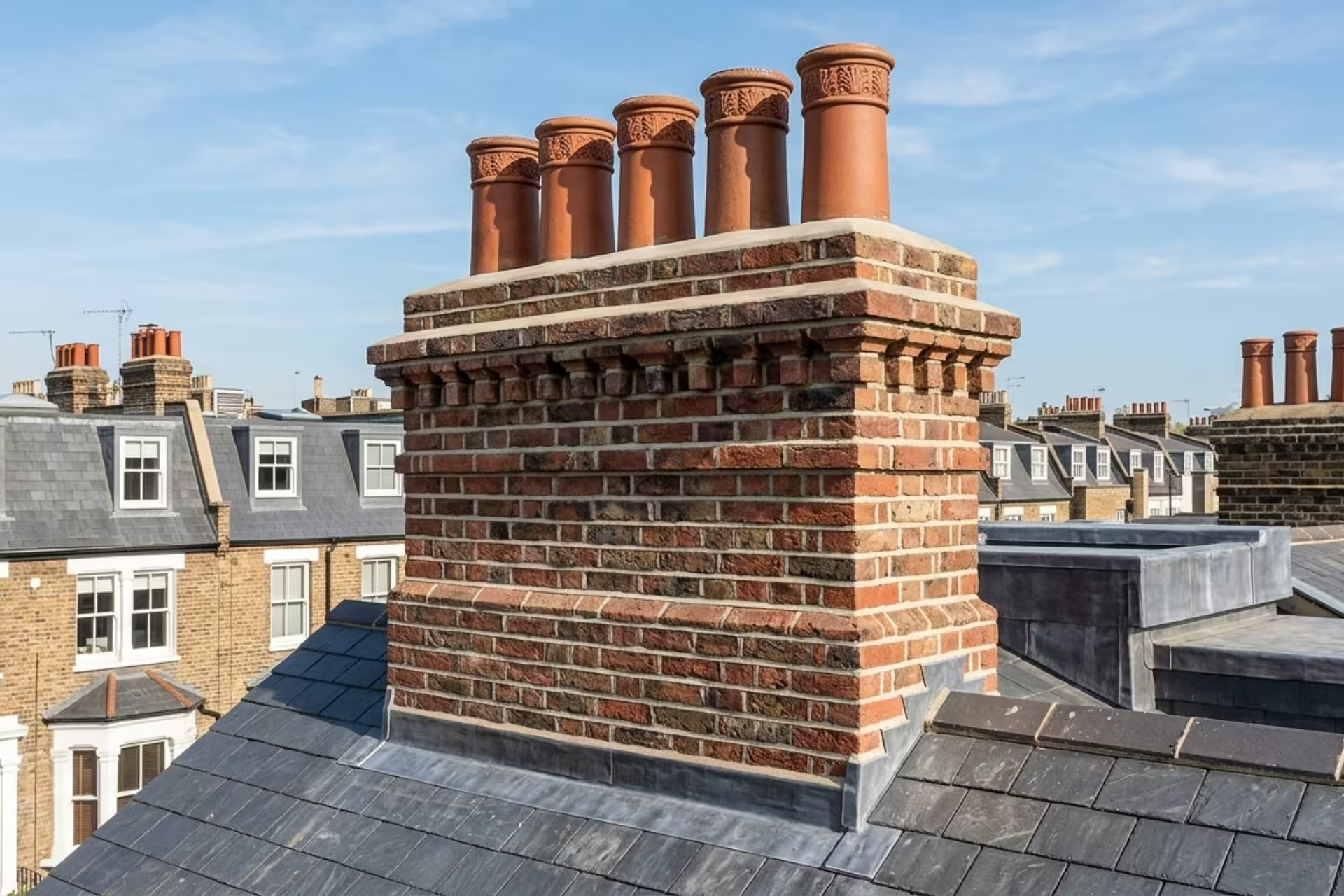
The chimney itself also has exposed brickwork, mortar joints, chimney pots and upper weatherproofing details.
A fault in any of these areas can allow moisture to enter, even if every visible roof tile appears undamaged.
Water can then travel through masonry, along roof timbers or behind internal finishes before it becomes visible indoors.
That means the location of a damp patch does not necessarily identify the exact entry point.
Start by Looking at When the Damp Appears
Before deciding whether the chimney, roof or internal flue is responsible, pay attention to when the problem occurs.
The timing of moisture can provide useful clues.
Damp Appears Shortly After Heavy Rain
If a stain becomes darker shortly after rainfall, external water penetration becomes a possibility.
The source may involve the chimney-top details, mortar joints, flashing or surrounding roof junction.
However, the timing alone cannot establish which component has failed.
Damp Appears Mainly During Wind-Driven Rain
A leak that occurs only when wind blows rain towards a particular side of the house may point towards an exposed junction or section of masonry.
Wind-driven rain can reach surfaces and small openings that remain relatively dry during light rainfall.
This can make intermittent leaks especially difficult to reproduce.
Damp Persists During Dry Weather
Moisture that remains visible during long dry periods may indicate retained water within the masonry, condensation or moisture-absorbing salts.
An old chimney can remain damp after the external water source has stopped.
Therefore, persistent staining does not automatically mean rainwater is still entering.
Damp Becomes More Noticeable During Cold Weather
If the problem worsens in winter, particularly around an unused fireplace, condensation may be contributing.
Warm indoor air can enter a cold, poorly ventilated flue and release moisture onto cooler internal surfaces.
A suitable investigation should consider ventilation and temperature as well as external building defects.
Where Is the Damp Showing? What Different Locations May Suggest
The position of the visible damage helps narrow the investigation, although it should not be treated as a definitive diagnosis.
Damp on the Chimney Breast
A damp patch on the chimney breast may originate from moisture moving through the chimney masonry, condensation within a disused flue or salts deposited during years of fireplace use.
If the staining appears brown or yellow, historic soot deposits may be contributing.
Damp within the chimney breast is not automatically evidence of defective roof flashing.
Water Stains Around the Ceiling Near the Chimney
Staining at ceiling level may be associated with water entering around the roof and chimney junction.
Possible locations include flashing, roof coverings, the back of the chimney and other adjacent weatherproofing details.
Water can also travel before becoming visible, so the stain may not be directly below the defect.
Damp Inside the Loft Near the Chimney Stack
Moisture in the loft can be particularly useful evidence because it may show whether water is reaching the underside of the roof near the chimney.
A professional may look for damp timbers, staining around the chimney junction or evidence of water travelling along adjacent surfaces.
A safe loft inspection can sometimes help distinguish a roof-junction problem from moisture confined mainly to the chimney breast.
Staining Around an Unused Fireplace
An old fireplace that has been boarded up or left unused may develop moisture problems even when the external roof is sound.
A poorly ventilated flue can retain humid air, while historic combustion residues may attract atmospheric moisture.
The result can look similar to penetrating damp.
Seven Hidden Problems Worth Investigating
When the roof appears undamaged, the investigation should consider less visible water-entry points as well as internal moisture sources.
1. Defective Flashing Hidden From Ground-Level View
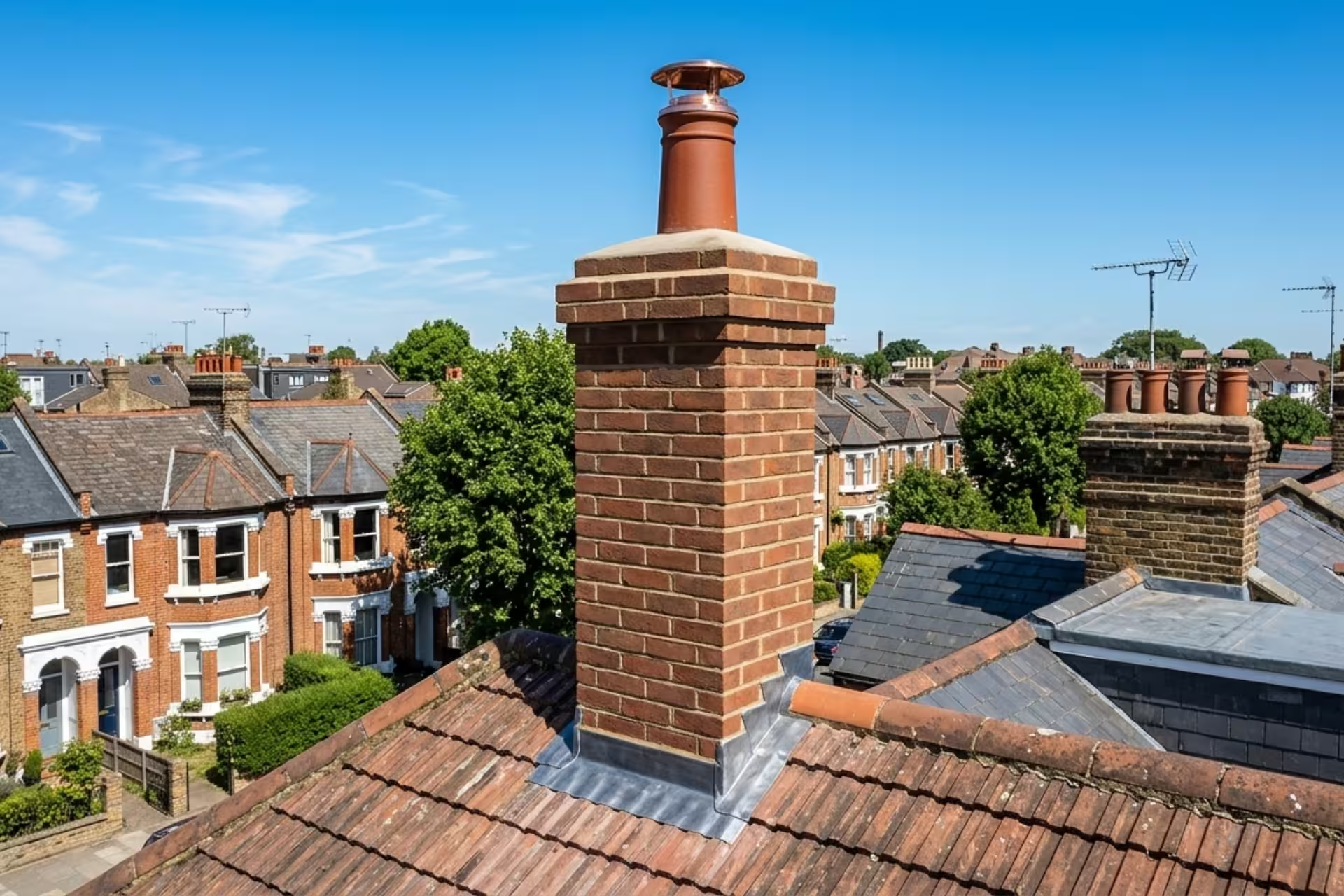
Flashing is fitted where the chimney passes through the roof to help prevent water entering the junction.
Even when the surrounding tiles appear intact, flashing may be loose, split, inadequately dressed or poorly integrated with the roof covering.
Certain defects may be hidden behind the stack or concealed from the street.
For example, water collecting at the rear of the chimney can enter through defective weatherproofing that cannot be seen from the front of the property.
What may suggest a problem: Damp appearing near the ceiling or within the loft after rainfall, particularly around the chimney-to-roof junction.
What needs checking: The full flashing arrangement, including less visible sides and the rear of the stack.
2. Small Gaps in Mortar Joints
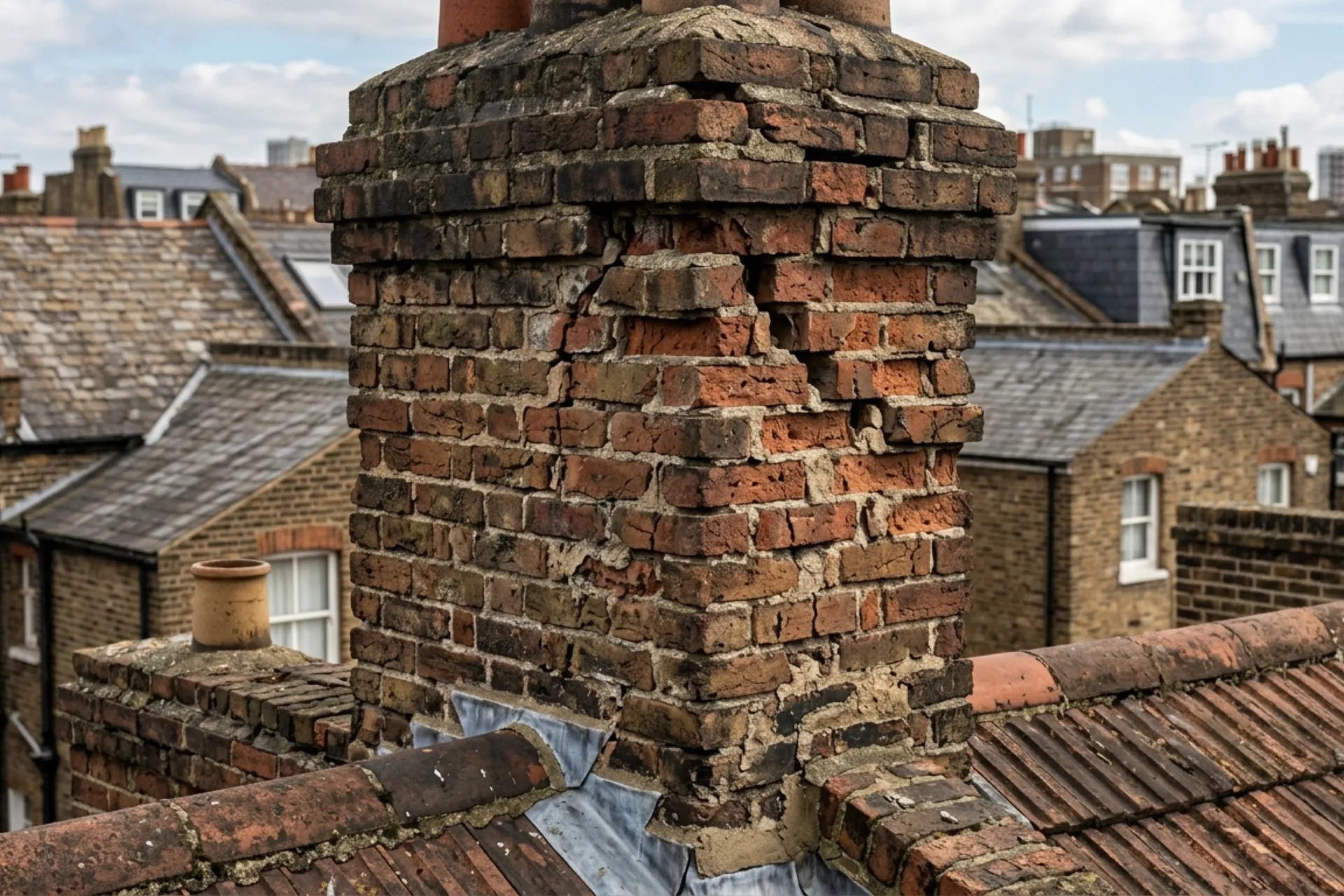
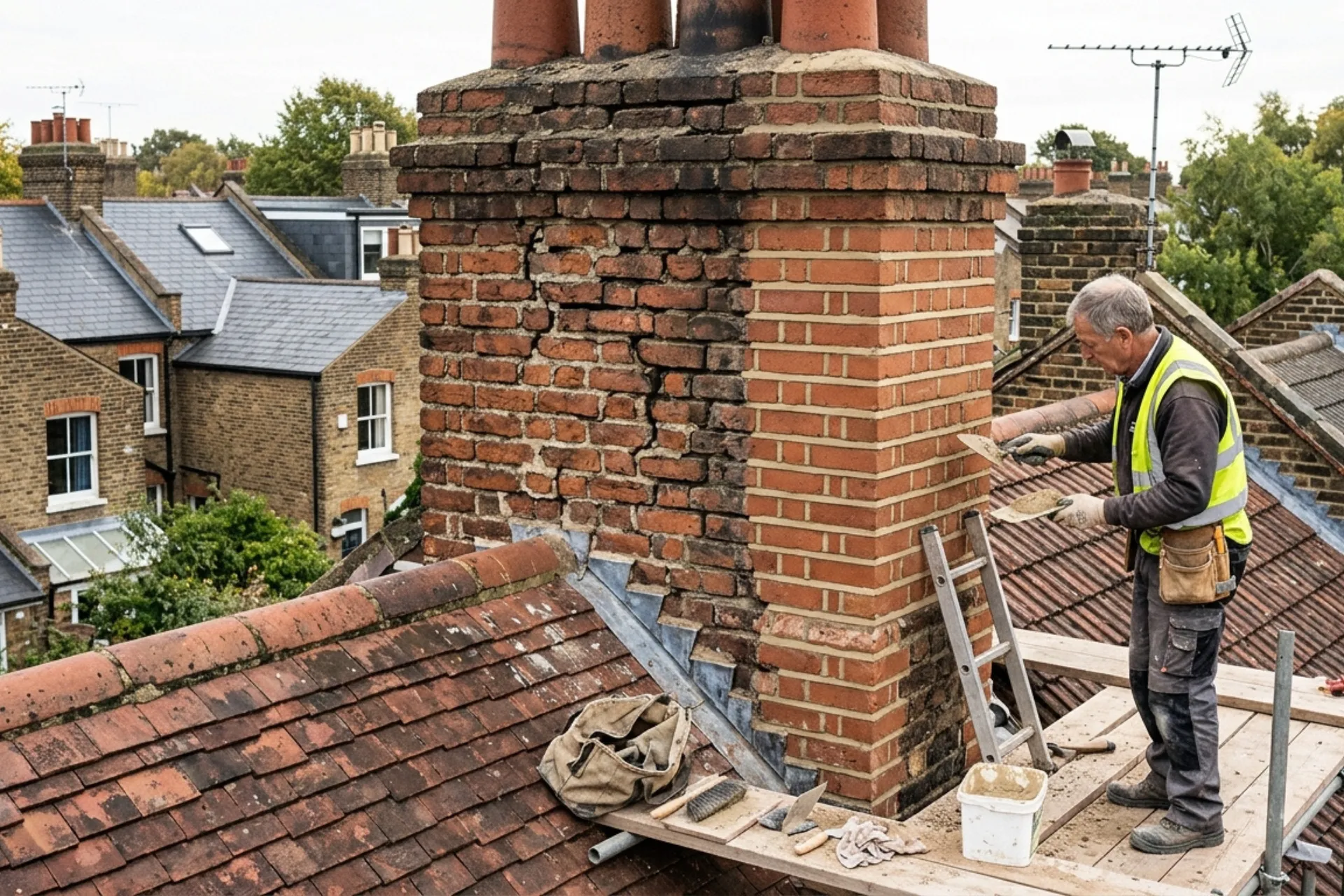
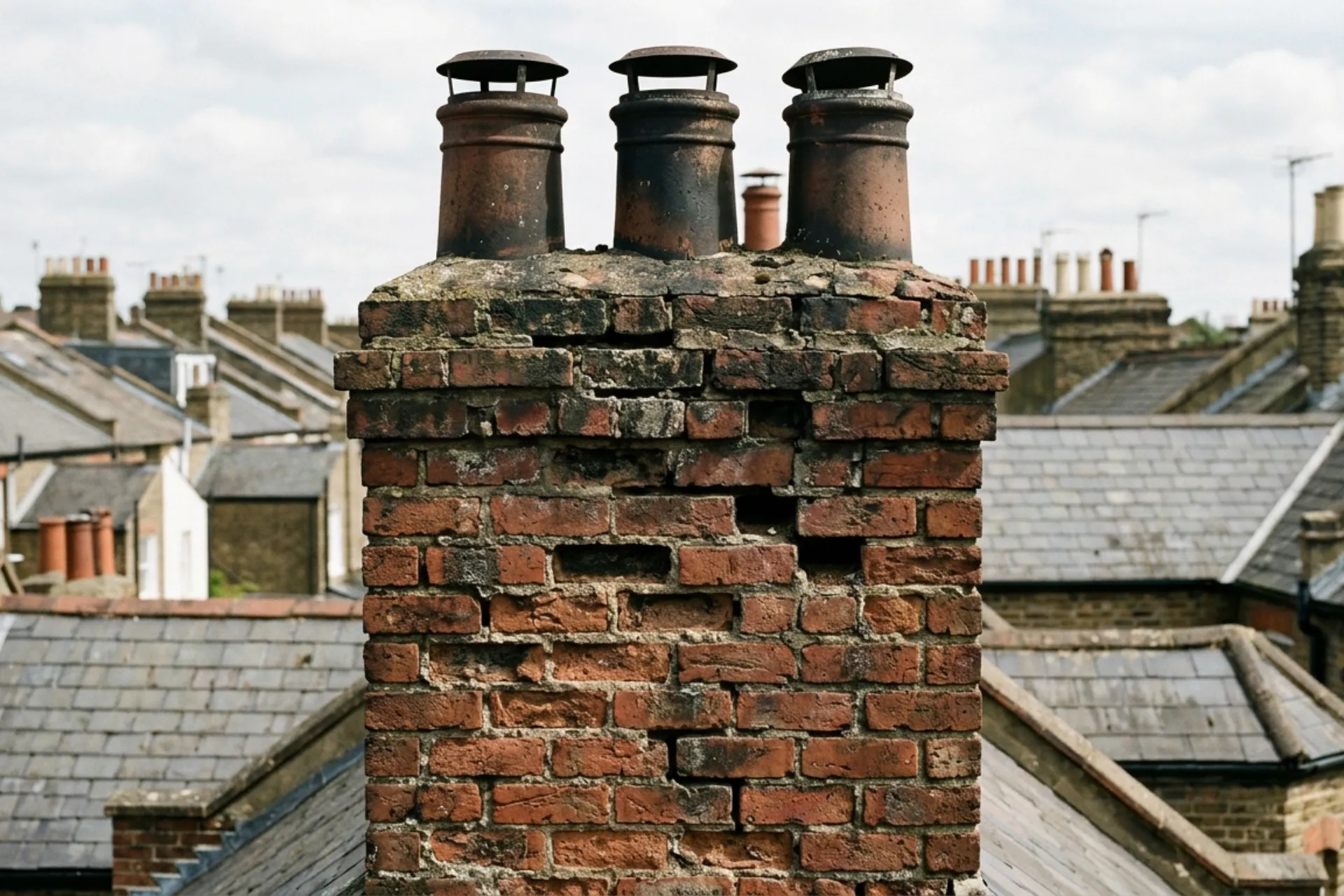
Chimney pointing can deteriorate gradually, sometimes leaving narrow openings that are difficult to identify without close inspection.
Rain driven against the chimney can enter through these joints and move into the surrounding masonry.
The visible brickwork may still look reasonably intact from a distance.
What may suggest a problem: Repeated moisture after rainfall, weathered pointing or small mortar fragments collecting near the roof.
What needs checking: The condition of the mortar joints across all accessible chimney faces, particularly those exposed to prevailing weather.
If deteriorating joints are found, see our guide to crumbling chimney mortar and its causes.
3. Cracks in Chimney Flaunching
The top of the chimney is often difficult to see from ground level.
Flaunching is the shaped mortar or suitable bedding material around chimney pots that helps support the pots and shed rainwater.
A crack in this material may allow water into the upper chimney even when the brickwork below appears sound.
What may suggest a problem: Moisture recurring after rain without obvious damage to the lower chimney stack.
What needs checking: The condition, shape and bonding of the flaunching around chimney pots and other upper-stack details.
4. Water Entering Through an Open Chimney Pot
Not every case of water inside a chimney is caused by a structural defect.
An open chimney pot can allow some rain to enter the flue directly.
Whether this becomes a problem depends on the chimney arrangement, exposure and how the flue is used or ventilated.
A missing, unsuitable or damaged terminal may increase water entry in some situations.
What may suggest a problem: Moisture or debris appearing inside the fireplace or flue, particularly following prolonged rainfall.
What needs checking: The chimney pot, terminal arrangement, flue condition and whether a suitable rain-resistant fitting is appropriate.
Do not seal a working flue or fit an arbitrary cap. Any terminal must be compatible with the fireplace or heating appliance and its ventilation requirements.
5. Rainwater Entering Around Damaged Chimney Brickwork
Individual bricks may develop fine cracks or deteriorated surfaces that are not easily visible from below.
Moisture can penetrate damaged masonry, especially where brick deterioration occurs alongside defective mortar.
The water may move through the stack before appearing indoors.
What may suggest a problem: Weathered bricks, spalling, cracked masonry or recurring damp associated with exposed chimney faces.
What needs checking: The condition of the bricks and surrounding joints, including whether selective brick replacement or masonry repair is required.
Read our guide to cracked, loose and spalled chimney bricks for more information.
6. Condensation Inside a Disused Chimney
A disused chimney that has been blocked or altered without suitable ventilation may experience condensation.
Warm, moisture-laden indoor air can reach cooler surfaces inside the chimney and release moisture.
This can lead to staining, persistent dampness or musty odours.
Because the moisture originates from the air rather than rain entering through the roof, external masonry repairs alone may not solve the problem.
What may suggest a problem: Damp during cold weather, moisture that does not clearly follow rainfall or a fireplace that has been sealed for a long period.
What needs checking: The flue’s ventilation arrangement, condition and any previous closure or alteration.
An unused flue still needs an appropriate ventilation strategy. Completely blocking it without assessing moisture and airflow can create further problems.
7. Historic Soot and Moisture-Absorbing Salts
A chimney breast can develop staining from materials deposited during years of fireplace use.
Certain salts associated with historic combustion residues absorb moisture from the surrounding air.
This may produce brown or yellow patches, sometimes accompanied by damaged plaster or repeated staining through decoration.
Importantly, a damp-looking chimney breast does not necessarily mean there is an active rainwater leak.
What may suggest a problem: Brown staining that returns despite dry weather, especially around an old fireplace or disused flue.
What needs checking: Whether historic salts, condensation or external water penetration are contributing, possibly in combination.
A suitable diagnosis should precede any treatment to internal finishes.
Why Chimney Leaks Can Be Difficult to Trace
A common assumption is that the source of a leak must be directly above the visible damp patch.
In practice, water can follow joints, surfaces and gaps before becoming visible indoors.
For example, water entering higher up the chimney may travel within masonry and produce staining some distance below.
Alternatively, rainwater entering at a roof junction may follow a timber or adjacent surface before reaching the ceiling.
There may also be more than one contributing defect.
A chimney with deteriorated pointing and an incorrectly ventilated disused flue could experience both external water penetration and internal condensation.
This is why isolated repairs based only on the position of a stain sometimes fail to resolve the problem.
A Practical Chimney Leak Investigation Checklist for Homeowners
You can collect useful information without climbing onto the roof or attempting to investigate the chimney at height.
Record When the Moisture Appears
Make a note of whether the damp becomes worse after heavy rain, strong winds, cold weather or prolonged periods of indoor heating.
If possible, keep a short record covering several days or weather events.
Photograph the Affected Areas
Photographs can help document changes in the stain’s size, position and colour.
Take pictures of the ceiling, chimney breast and any visible external defects from safe locations.
Check Whether the Fireplace Is Used
Establish whether the chimney serves an active appliance, an open fireplace or a disused flue.
This is important because the causes of moisture and the safe options for ventilation or terminal repairs may differ.
Look for Safe-to-Observe Signs in the Loft
If the loft has safe access and suitable lighting, observe whether staining or dampness is visible near the chimney and surrounding roof.
Do not step between joists, approach unsafe areas or touch electrical equipment or wiring in wet areas.
Review Previous Repair Work
Make a note of previous flashing repairs, repointing, chimney-pot work, roof alterations or fireplace closures.
A history of earlier work may help explain why moisture has returned.
Arrange a Professional Assessment
If the source remains unclear, an appropriate specialist can assess the chimney, adjoining roof details and potential internal moisture causes.
This avoids committing to a particular repair before the cause is understood.
What a Professional Chimney Leak Inspection Should Include
A useful inspection should answer three questions:
Where is moisture entering or forming? What is allowing it to happen? Which work is necessary to prevent recurrence?
The investigation may involve several areas.
External Chimney Condition
The contractor checks the accessible mortar, brickwork, chimney pots and flaunching for defects that may allow water entry.
Roof and Flashing Junction
The surrounding roof coverings, flashing and less visible areas around the chimney should be examined where relevant.
A roofing specialist may be needed for defects outside the scope of chimney masonry work.
Internal Damp Pattern
The location, extent and timing of internal staining are considered alongside the external findings.
The appearance of damp by itself should not be used to claim a specific cause.
Flue Use and Ventilation
For a blocked or unused chimney, the investigation should consider whether ventilation and historic residues are contributing to moisture.
Where the chimney serves a heating appliance, flue safety and ventilation must be assessed by an appropriately qualified professional.
Repair Recommendation
The proposed work should address the identified defect, not simply conceal its visible effects.
Where more than one cause remains possible, further investigation may be preferable to unnecessary repairs.
What Repairs May Be Needed Once the Leak Is Identified?
A repair should be selected only after establishing the likely source of the moisture.
| Confirmed problem | Potential corrective work |
|---|---|
| Failed chimney pointing | Renew defective mortar joints using compatible materials |
| Deteriorated chimney bricks | Replace or repair affected masonry |
| Cracked flaunching | Repair or renew the chimney-top flaunching |
| Loose or damaged chimney pot | Secure, reset or replace the pot where appropriate |
| Defective roof flashing | Repair or renew affected flashing through a competent roofing specialist |
| Inappropriate terminal on a disused flue | Assess a suitable ventilated, rain-resistant terminal |
| Condensation in a disused flue | Correct the ventilation arrangement based on a proper assessment |
| Historic salt contamination | Address moisture conditions and obtain suitable advice on internal finishes |
More extensive chimney masonry defects may require partial reconstruction, but rebuilding should not be recommended merely because there is a damp patch indoors.
For a general explanation of repair options, read what causes chimney leaks and how they can be repaired.
Why Sealing or Painting Over the Damp Can Make Diagnosis Harder
When a damp patch appears indoors, it can be tempting to repaint the wall, apply stain-blocking products or cover the affected plaster.
These measures may improve the appearance temporarily, but they do not identify why moisture is present.
If rainwater continues to enter through a defective external detail, decoration alone will not stop it.
Similarly, if the staining is associated with salts or condensation inside a disused flue, replacing external pointing may not address the problem.
Some impermeable treatments can also interfere with moisture movement in traditional masonry.
The most appropriate sequence is to investigate the moisture source, correct the underlying defect and then assess the condition of the internal finishes.
Is a Chimney Leak an Emergency?
Not every damp patch requires an emergency callout, but some conditions need urgent attention.
Seek prompt professional assistance if:
- Water is entering near electrical fittings or wiring.
- Ceiling plaster is bulging or showing signs of possible failure.
- Bricks or other chimney components appear loose or are falling.
- The chimney stack shows visible structural movement.
- There is a significant active leak affecting the occupied space.
- Water ingress may have affected a working flue or heating appliance.
Keep clear of unsafe areas and avoid using an affected fireplace or appliance until its safety has been confirmed where flue damage or water ingress is suspected.
For routine staining without an immediate hazard, arranging a timely investigation is generally more useful than repeatedly patching the interior.
Hidden Chimney Leaks in Older North London Homes
Properties across Cricklewood, Hampstead, West Hampstead, Finchley, Hendon, Willesden and Highgate often have traditional chimney stacks that have undergone alterations over many years.
Some fireplaces remain in regular use, while others have been removed, blocked or converted.
In older buildings, the interaction between original brickwork, previous repairs, roof junctions and unused flues can make moisture problems more complicated than they first appear.
A traditional chimney may have sound roof tiles but deteriorated mortar or chimney-top details.
Another property may have externally sound masonry but condensation and staining within a disused flue.
For this reason, inspecting the property as a complete system is more reliable than assuming every damp chimney breast requires repointing or rebuilding.
Need Help Finding the Cause of a Chimney Leak?
If water stains keep returning around your chimney, but the roof appears undamaged, it is worth investigating the source before arranging unnecessary repairs.
MR Chimney Repairs is a family-run chimney and brickwork company based in Cricklewood, North London.
Led by Michael Rock, with more than 35 years of experience in chimney and brickwork services, the company carries out chimney masonry repairs, repointing, chimney-pot work and related repairs.
We serve homeowners across Cricklewood, Hampstead, Finchley, Hendon, Willesden, Highgate, West Hampstead, Golders Green and surrounding North London areas.
Whether the issue involves deteriorated pointing, damaged chimney bricks or defects at the top of the stack, we can discuss the symptoms and assess the chimney masonry to determine appropriate next steps. Where the problem involves roof flashing, internal condensation or flue safety, other suitably qualified specialists may be required.
Concerned About a Leaking Chimney?
Call 07751 362934 or email info@mrchimneyrepairs.co.uk to discuss the problem and request a quotation.
Explore our chimney repair services or contact us to arrange an assessment.