Why Is Mortar Crumbling Between Chimney Bricks?
Have you noticed small pieces of mortar collecting on your roof, gaps appearing between chimney bricks, or joints that look rough and worn away? These could be signs that the mortar holding your chimney brickwork together is beginning to deteriorate.
Crumbling chimney mortar is particularly common in older properties, where brick chimneys have been exposed to decades of changing weather conditions. Because chimney stacks sit above the roofline, their mortar joints face constant exposure to rain, wind, frost and temperature changes.
Although deteriorating mortar may initially appear to be a minor cosmetic issue, it can allow moisture into the brickwork and gradually affect the condition of the chimney stack.
The important question is not simply how to replace the missing mortar, but why the mortar is crumbling in the first place.
In this guide, we’ll explain the causes of chimney mortar deterioration, how to recognise different warning signs and what homeowners should consider before arranging repairs.
What Does Crumbling Chimney Mortar Look Like?
Mortar is the material placed between bricks during construction. It helps bind the masonry together, distribute loads and protect the joints against weather exposure.
When mortar begins deteriorating, its appearance and texture can change noticeably.
You may observe:
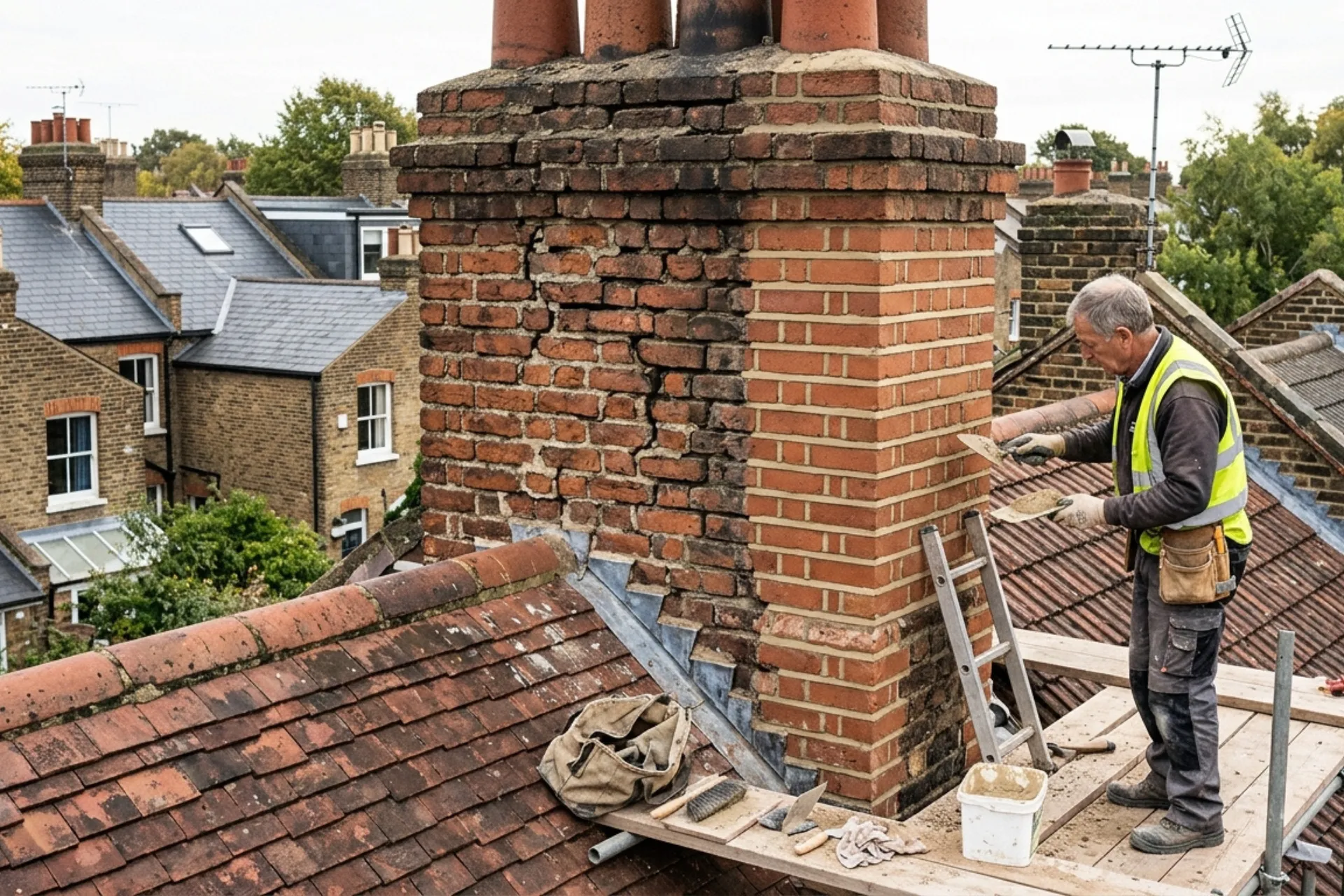
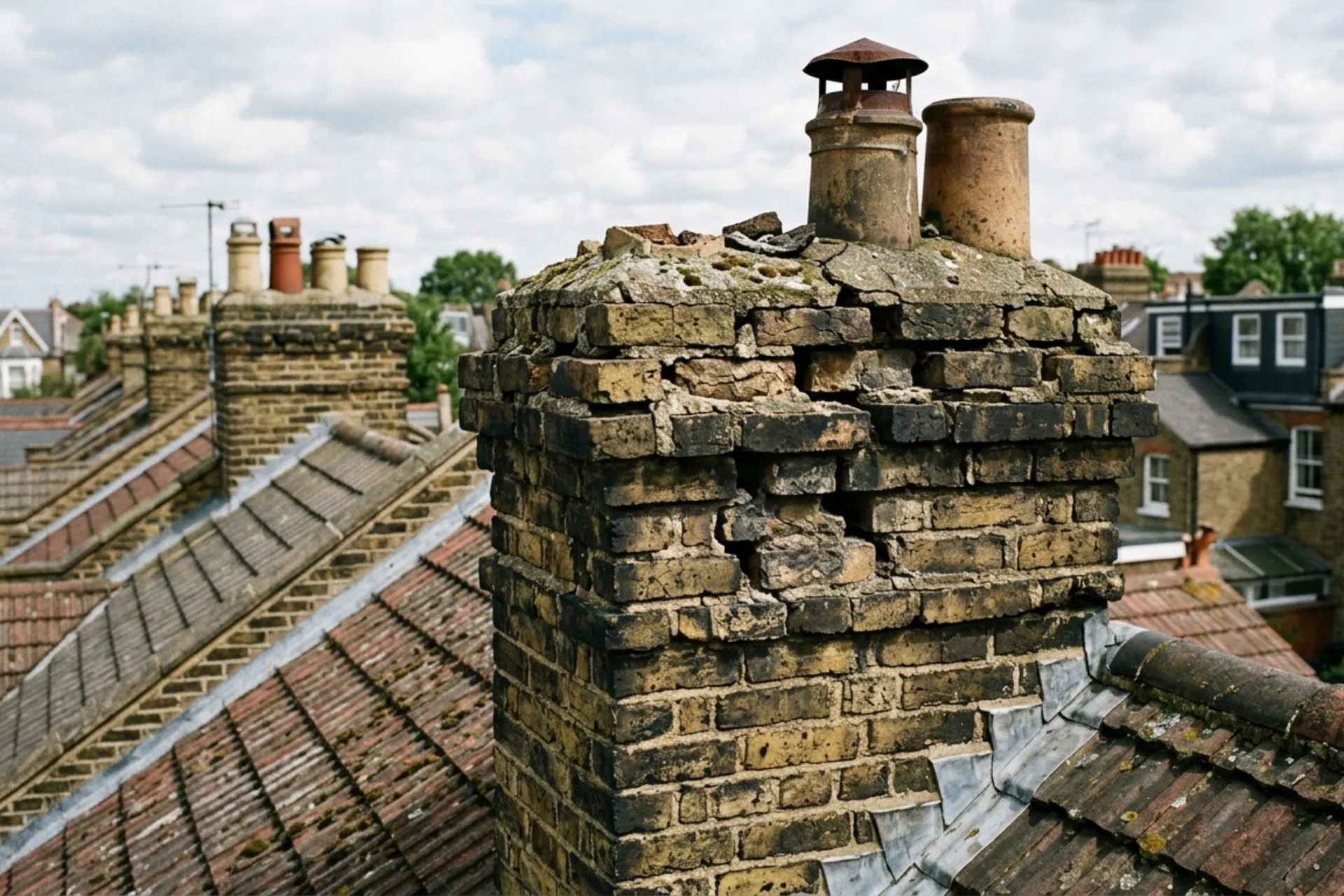
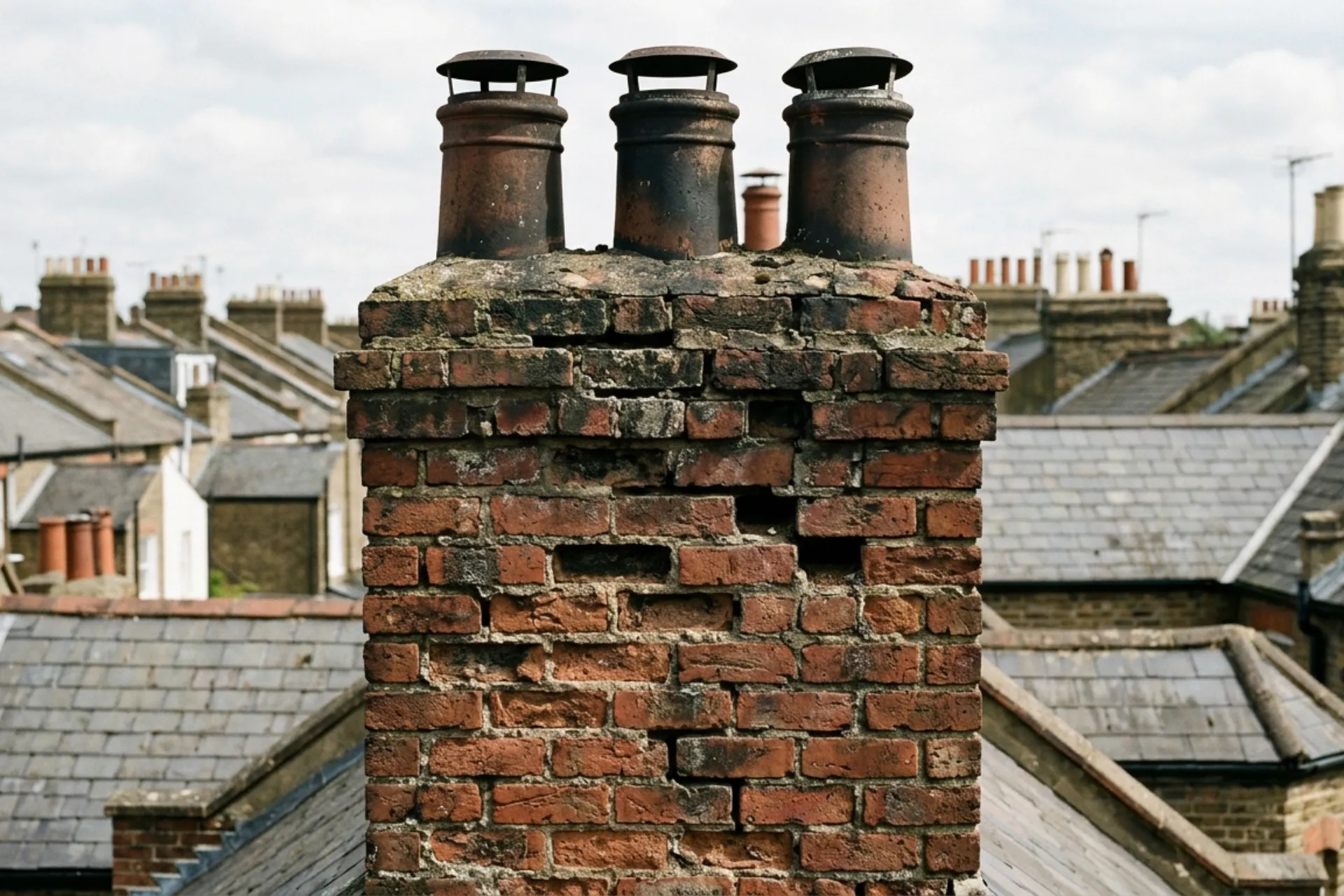
- Powdery mortar: The surface breaks down into fine, sandy particles.
- Recessed joints: Mortar has worn away, leaving visible gaps between the bricks.
- Cracked joints: Thin or wider cracks develop along the mortar lines.
- Loose fragments: Small pieces detach and accumulate on the roof or in gutters.
- Uneven pointing: Some joints remain intact while others appear deeply eroded.
- Exposed brick edges: The surrounding brickwork becomes more vulnerable because the mortar no longer fills the joints properly.
These signs do not all indicate the same level of damage. Light surface erosion may be relatively localised, while deep gaps and loose masonry can indicate more extensive deterioration.
A closer professional assessment helps establish the difference.
What Causes Mortar to Crumble Between Chimney Bricks?
Mortar deterioration usually develops gradually rather than occurring overnight. Its causes depend on the age of the chimney, the materials originally used and the conditions the structure has experienced.
1. Years of Rain and Weather Exposure
Chimney stacks are exposed to weather on every side. Unlike brickwork beneath a roof overhang, the upper chimney receives direct rainfall and wind-driven moisture.
Over time, repeated wetting and drying can contribute to mortar erosion, particularly where joints are already weathered or poorly maintained.
Rainwater may also penetrate small openings, encouraging further deterioration within the masonry.
What to look for: Mortar erosion that appears more pronounced on exposed chimney faces or near previously damaged joints.
2. Freeze-Thaw Damage During Cold Weather
Mortar and brickwork can absorb moisture. When that moisture freezes, it expands and can place pressure on the surrounding material.
Repeated freezing and thawing may contribute to cracks and surface breakdown, particularly where joints are saturated or already weakened.
London generally experiences milder winters than some parts of the UK, but periods of freezing weather can still affect exposed masonry.
What to look for: Flaking mortar, newly opened joints or deterioration that becomes more noticeable after periods of wet and freezing weather.
3. Ageing or Weathered Mortar
Even well-constructed chimney joints do not remain unchanged indefinitely.
Older mortar may gradually lose material through weathering, exposure and environmental conditions. The rate of deterioration depends on the original composition, workmanship, brick type and exposure.
In Victorian and Edwardian properties, some chimneys were built using lime-based mortars that behave differently from modern cement-rich mixes.
Older mortar should not automatically be considered defective simply because it is softer than modern cement mortar.
The important distinction is whether the joints remain functional or have become excessively eroded, loose or open.
What to look for: Deeply recessed mortar joints, uneven weathering and areas where the joint material has significantly reduced.
4. Incompatible Mortar Used During Previous Repairs
Not every mortar mix is suitable for every chimney.
In older brickwork, the existing bricks may be relatively soft and porous. Applying very hard, dense cement-rich mortar can sometimes create an incompatibility between the original masonry and the repair.
This may restrict moisture movement or concentrate stresses in adjacent materials, potentially contributing to damage.
It is also possible for poorly prepared or incorrectly mixed mortar to deteriorate prematurely.
What to look for: Hard modern-looking pointing beside crumbling older joints, damaged brick edges or mortar repairs that have separated from the surrounding masonry.
A specialist should consider the original construction materials before selecting replacement mortar.
5. Poorly Executed Pointing Work
Mortar joints can fail sooner than expected when previous pointing repairs were not carried out correctly.
Possible workmanship issues include insufficient removal of defective mortar, poor joint preparation, inappropriate mixing, weak bonding or inadequate protection while the new mortar cures.
A thin layer of mortar applied over an existing failed joint may also detach because it has not formed a suitable bond with the underlying material.
What to look for: Newer pointing that is cracking, separating from the brick edges or falling away in pieces.
6. Movement Within the Chimney Structure
Mortar cracks are not always caused by weathering alone.
Movement within the chimney stack or supporting masonry can place stress on the joints. Possible contributors include building movement, temperature-related movement, past alterations and structural defects.
Mortar cracks associated with movement may follow a recognisable pattern rather than appearing randomly across weathered joints.
What to look for: Stepped cracking, widening joints, displaced bricks or visible changes to the alignment of the chimney stack.
When significant movement is suspected, the cause should be investigated before the joints are repaired.
How to Tell Whether the Mortar or the Bricks Are Failing
It is important to distinguish mortar deterioration from damage affecting the bricks themselves.
A chimney can have worn mortar while most of its bricks remain sound. In other cases, both materials may have deteriorated.
Signs the Main Problem May Be Mortar
The joints look recessed, powdery, cracked or partially missing, but the bricks retain their shape and appear firmly positioned.
This may indicate that joint repairs could be suitable, subject to assessment of the overall structure.
Signs the Bricks May Also Be Damaged
Brick faces are breaking away, individual bricks are cracked, edges are crumbling or pieces of masonry appear loose.
These defects can require brick replacement or more extensive masonry work in addition to mortar repairs.
Signs a Wider Structural Problem May Exist
The chimney appears to lean, bricks have shifted significantly or cracks extend through several courses of masonry.
Such conditions should not be treated as ordinary pointing defects without investigating the stability of the structure.
If you are seeing several types of damage together, read our guide to chimney stack damage, warning signs and repair options.
What Happens If Crumbling Chimney Mortar Is Ignored?
The consequences depend on how much mortar has deteriorated and the condition of the surrounding masonry.
Rainwater Can Enter Open Joints
As mortar washes away, joints may become pathways for moisture.
Repeated water penetration can contribute to further mortar deterioration, frost damage and damage to vulnerable bricks.
Surrounding Brickwork May Deteriorate
Missing mortar exposes more of the brick edges and joint surfaces to weather.
If moisture-related problems continue, otherwise repairable sections may suffer further damage.
Chimney Stability May Be Affected
Mortar plays an important role in masonry construction.
Extensive joint deterioration can reduce the integrity of the chimney, particularly when combined with loose bricks, structural movement or other defects.
Not every recessed joint presents an immediate structural risk, but widespread mortar loss should be assessed.
Additional Repairs May Become Necessary
A localised pointing problem may become more involved if damaged joints are left exposed and deterioration spreads into neighbouring masonry.
Early assessment can help determine whether limited repairs are practical.
Is Crumbling Chimney Mortar Always a Serious Problem?
No. The presence of weathered mortar does not automatically mean the chimney is unsafe or requires major reconstruction.
The severity depends on several factors, including the depth of erosion, the distribution of damaged joints, the condition of the bricks and whether there is visible movement.
For example, a few shallow, weathered joints may require monitoring or localised repair. Deeply eroded joints across much of the stack need closer attention, especially if the bricks are loose.
A visibly leaning chimney or masonry falling from roof height is a more urgent situation and should be assessed promptly.
The appearance of the mortar is therefore one part of the diagnosis rather than the sole basis for deciding what work is necessary.
Why Chimney Mortar Can Deteriorate Unevenly
You may notice that one side of your chimney appears badly weathered while the opposite side remains relatively sound.
This is not unusual.
Different parts of a chimney experience different amounts of wind-driven rain, sunlight and drying.
The upper courses may also experience greater exposure, while previous repairs can leave neighbouring sections with different mortar properties.
Localised moisture entry around the top of the stack or other details may also contribute to uneven deterioration.
For homeowners, this means a chimney should be assessed as a complete structure rather than assuming that every mortar joint needs the same treatment.
How Specialists Investigate Crumbling Chimney Mortar
Before recommending repairs, a chimney specialist should establish how far the deterioration extends and whether another defect is contributing to the problem.
Checking the Condition of the Joints
The specialist examines mortar erosion, cracking and gaps, looking at whether the problem is concentrated in certain areas or spread across the stack.
Assessing the Surrounding Bricks
The condition of the brick faces, edges and alignment helps determine whether the masonry remains suitable for joint repairs.
Looking for Water-Entry Points
Defective flaunching, chimney-top details, flashing or nearby roof components can sometimes contribute to persistent moisture problems.
These should be considered where there are signs of water penetration.
Identifying Previous Repairs
Existing pointing can reveal whether different mortars have been used and whether previous repairs are separating from the original brickwork.
Considering Structural Movement
Significant cracks, displaced bricks or changes in alignment may require further investigation before normal mortar repairs can proceed.
An assessment should lead to recommendations based on the condition of the structure, not simply the amount of visible missing mortar.
What Are the Repair Options for Crumbling Chimney Mortar?
The appropriate repair depends on the results of the inspection.
Localised Mortar Joint Repairs
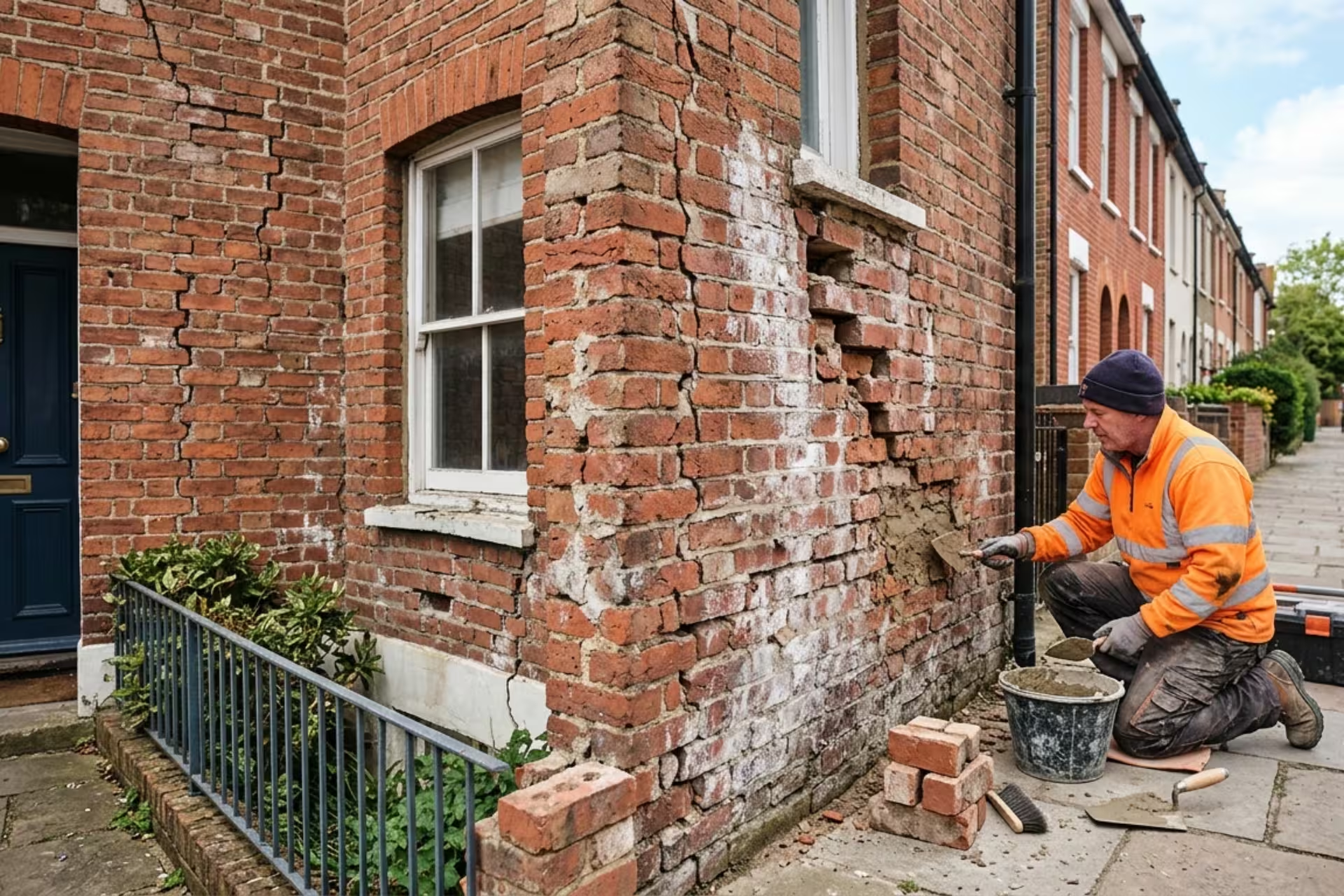
When deterioration is restricted to a small number of joints and the surrounding bricks remain sound, targeted repairs may be possible.
Chimney Repointing
Where existing mortar has become defective across a larger area, chimney repointing may be recommended.
This involves removing unsuitable mortar to an appropriate depth and replacing it with compatible material.
For details about the service, visit chimney repointing services.
Mortar Repairs Alongside Brick Replacement
If individual bricks have deteriorated, mortar replacement alone may not address the problem.
The defective bricks may need to be replaced as part of a coordinated masonry repair.
Partial Chimney Reconstruction
Where mortar failure is accompanied by significant instability or deterioration in the brickwork, rebuilding a damaged section may be necessary.
A professional assessment determines whether existing masonry can be retained safely.
For more information about the role of repointing in maintaining traditional masonry, see our article on why chimney repointing matters.
Should You Try to Repair Crumbling Chimney Mortar Yourself?
Chimney work presents risks that are different from repairs to brickwork at ground level.
Accessing a chimney usually involves working at height, often on a sloping roof near fragile materials or exposed edges.
There is also the risk of overlooking loose brickwork, structural defects or incompatible materials.
For these reasons, homeowners should avoid attempting roof-level mortar repairs without the necessary competence, equipment and safe access arrangements.
You can document visible deterioration from a safe position on the ground, but closer examination and repair should be left to competent professionals.
If pieces of masonry are falling, keep people away from the affected area and seek urgent assistance.
Crumbling Chimney Mortar in Older North London Homes
Across Cricklewood, Hampstead, West Hampstead, Finchley, Willesden and other parts of North London, many properties have traditional brick chimney stacks.
The condition of their mortar can vary considerably depending on age, exposure, maintenance history and the materials used during previous repairs.
In an older property, retaining compatible construction materials is often important.
A repair that is suitable for a modern chimney may not necessarily be appropriate for a traditional stack built with softer bricks and lime mortar.
Understanding the original construction helps identify an approach that protects the surviving brickwork rather than introducing avoidable new problems.
How to Reduce the Risk of Further Chimney Mortar Deterioration
Although weather exposure cannot be eliminated, property owners can take practical steps to identify developing problems.
- Include visible chimney brickwork in routine exterior property checks.
- Look for changes in mortar joints after severe weather.
- Pay attention to falling mortar fragments or debris in accessible areas.
- Investigate recurring damp problems instead of covering internal stains.
- Avoid unnecessary hard cement-based patching on traditional masonry.
- Arrange an assessment when joint deterioration becomes widespread or bricks appear loose.
Good maintenance is about recognising changes early and selecting repairs appropriate to the structure.
Concerned About Crumbling Mortar on Your Chimney?
If mortar is falling from your chimney, gaps are appearing between bricks or previous pointing repairs are breaking down, it’s worth finding out what is causing the deterioration.
MR Chimney Repairs is a family-run chimney and brickwork company based in Cricklewood, North London.
Led by Michael Rock, with more than 35 years of personal experience in chimney and brickwork services, the company provides chimney repointing, mortar joint repairs, brickwork restoration and related chimney repairs.
We work across Cricklewood, Hampstead, Finchley, Hendon, Willesden, West Hampstead, Highgate, Golders Green and surrounding parts of North London.
Whether the problem involves a small area of deteriorating mortar or more extensive chimney damage, we can assess the condition and recommend suitable repairs.
Arrange a chimney mortar assessment
Call 07751 362934 or email info@mrchimneyrepairs.co.uk to discuss the condition of your chimney and request a quotation.