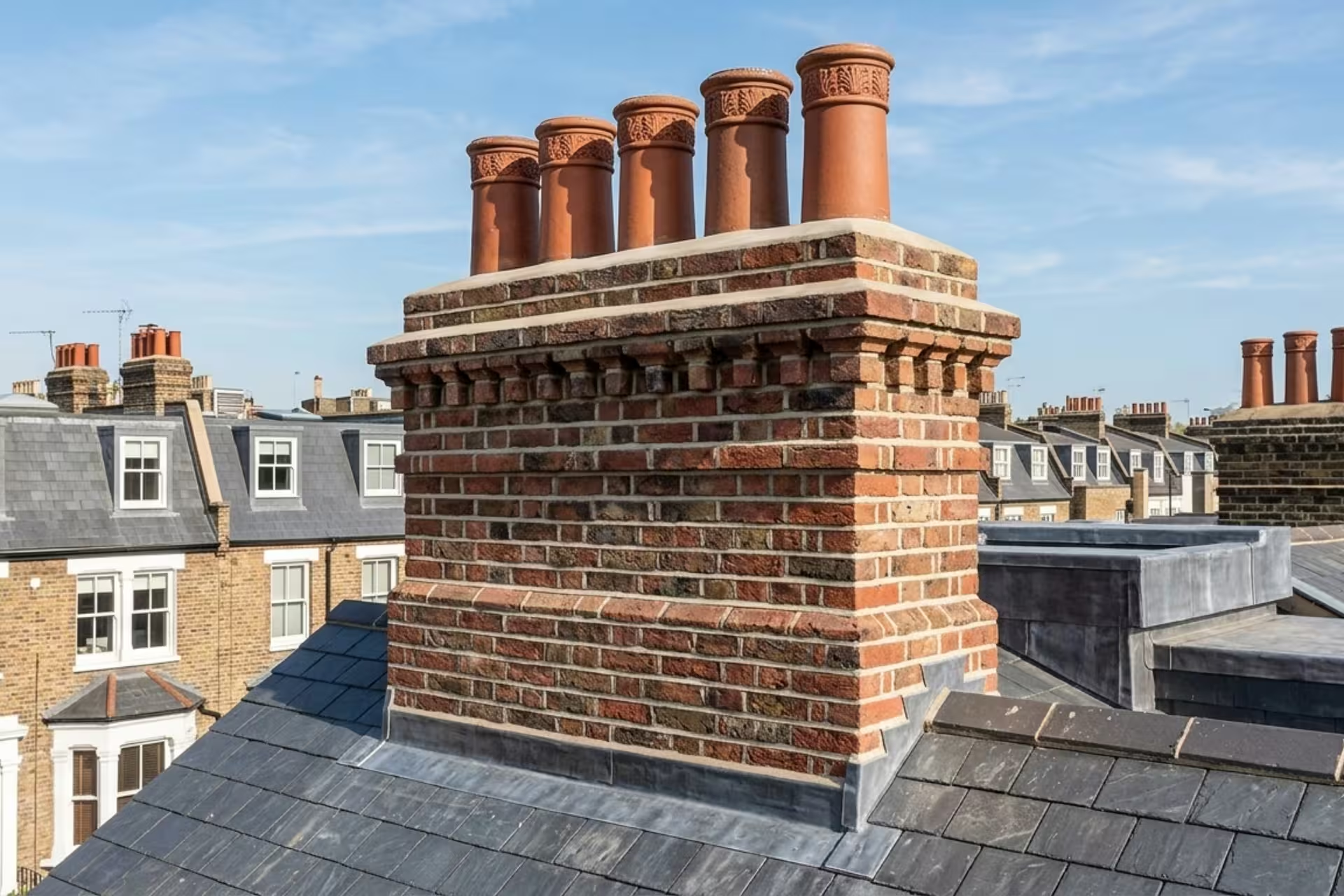
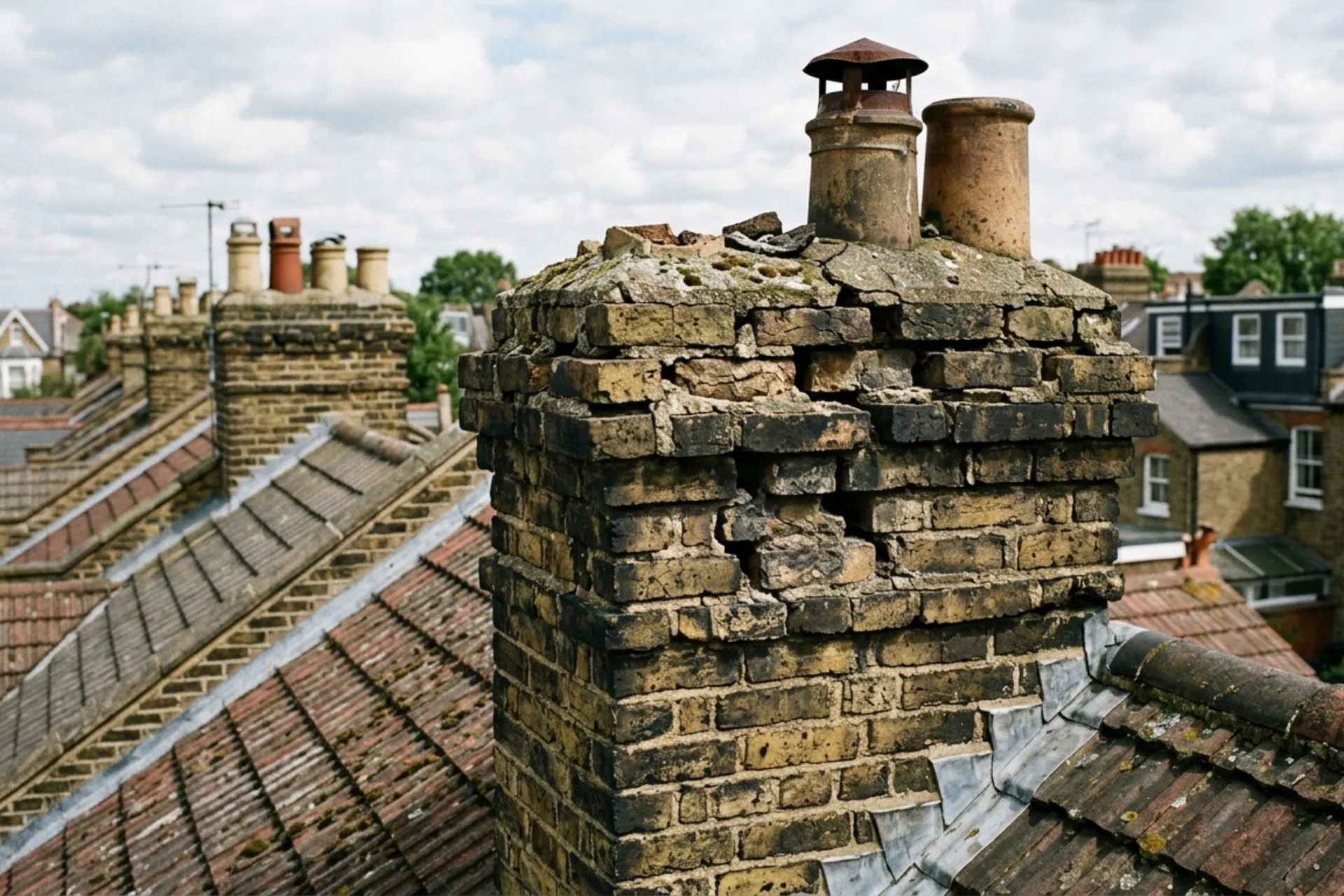
A chimney stack may look solid from the ground, but its exposed position makes it one of the most vulnerable parts of a property’s exterior. Years of rain, wind, frost and changing temperatures can gradually weaken the mortar, damage individual bricks and affect the stability of the structure.
In many London homes, chimney stack damage develops slowly. A small crack may allow rainwater into the masonry, while deteriorating mortar can leave surrounding bricks more exposed. Without suitable repairs, relatively minor defects may turn into more extensive problems.
Understanding the different types of chimney damage can help you recognise potential issues before they become more serious. This guide explains how chimney stacks deteriorate, what visible damage may indicate and the repair methods commonly used to restore them.
What Is Chimney Stack Damage?
Chimney stack damage refers to deterioration affecting the masonry structure that extends above a property’s roofline. The damage may be limited to surface materials or involve deeper problems with the brickwork, mortar joints and structural stability.
The stack is different from the internal chimney flue, although defects in either can sometimes affect the other.
Common forms of chimney stack damage include:
- Cracked, spalled or broken chimney bricks
- Loose, missing or eroded mortar joints
- Movement or separation within the brickwork
- Leaning or distorted chimney stacks
- Damaged mortar around chimney pots
- Cracked chimney crowns or flaunching
- Moisture penetration through deteriorated masonry
- Deterioration around the junction between the chimney and roof
The location and severity of the damage help determine whether individual components can be repaired or more extensive restoration is required.
Common Types of Chimney Stack Damage
Not all damage develops in the same way. Some problems affect individual bricks, while others involve the joints holding the masonry together or the structure as a whole.
1. Cracked or Spalled Chimney Bricks
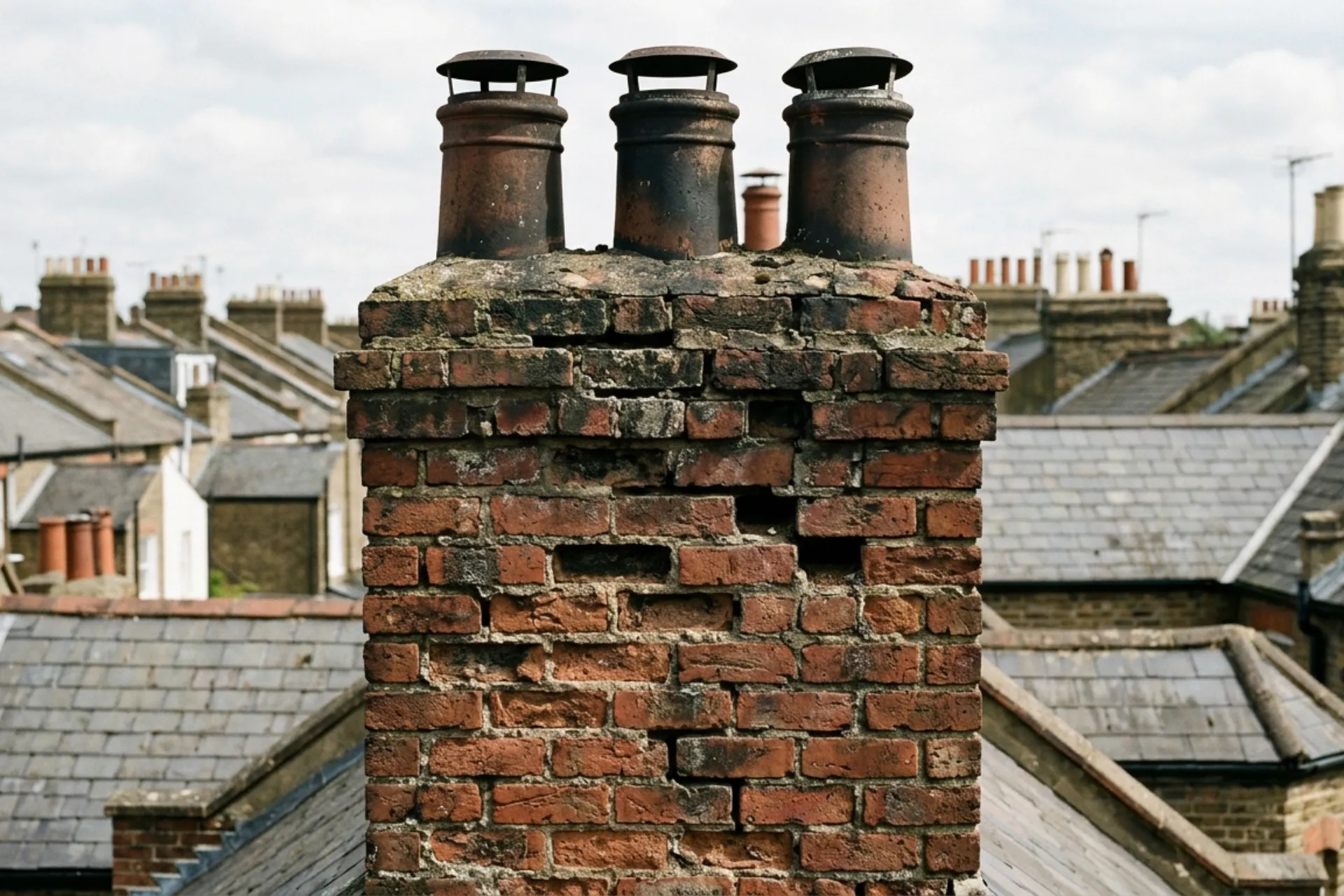
Brick spalling occurs when the face of a brick begins to flake, crumble or break away. It is often associated with moisture entering porous masonry and repeated exposure to freezing conditions.
Initially, the damage may appear as a rough or chipped surface. As deterioration progresses, larger sections of the brick can become loose.
Individual damaged bricks may be replaceable if the surrounding masonry remains sound. Widespread brick deterioration requires a more detailed assessment of the stack.
2. Eroded or Missing Mortar Joints
Mortar fills the spaces between bricks, helping distribute loads and resist water penetration. Over time, exposure to weather can cause the joints to become recessed, cracked or powdery.
When mortar deteriorates, rainwater can enter more easily and accelerate damage to the surrounding brickwork.
Where the bricks and structure remain sound, professional chimney repointing may restore the joints and improve weather resistance.
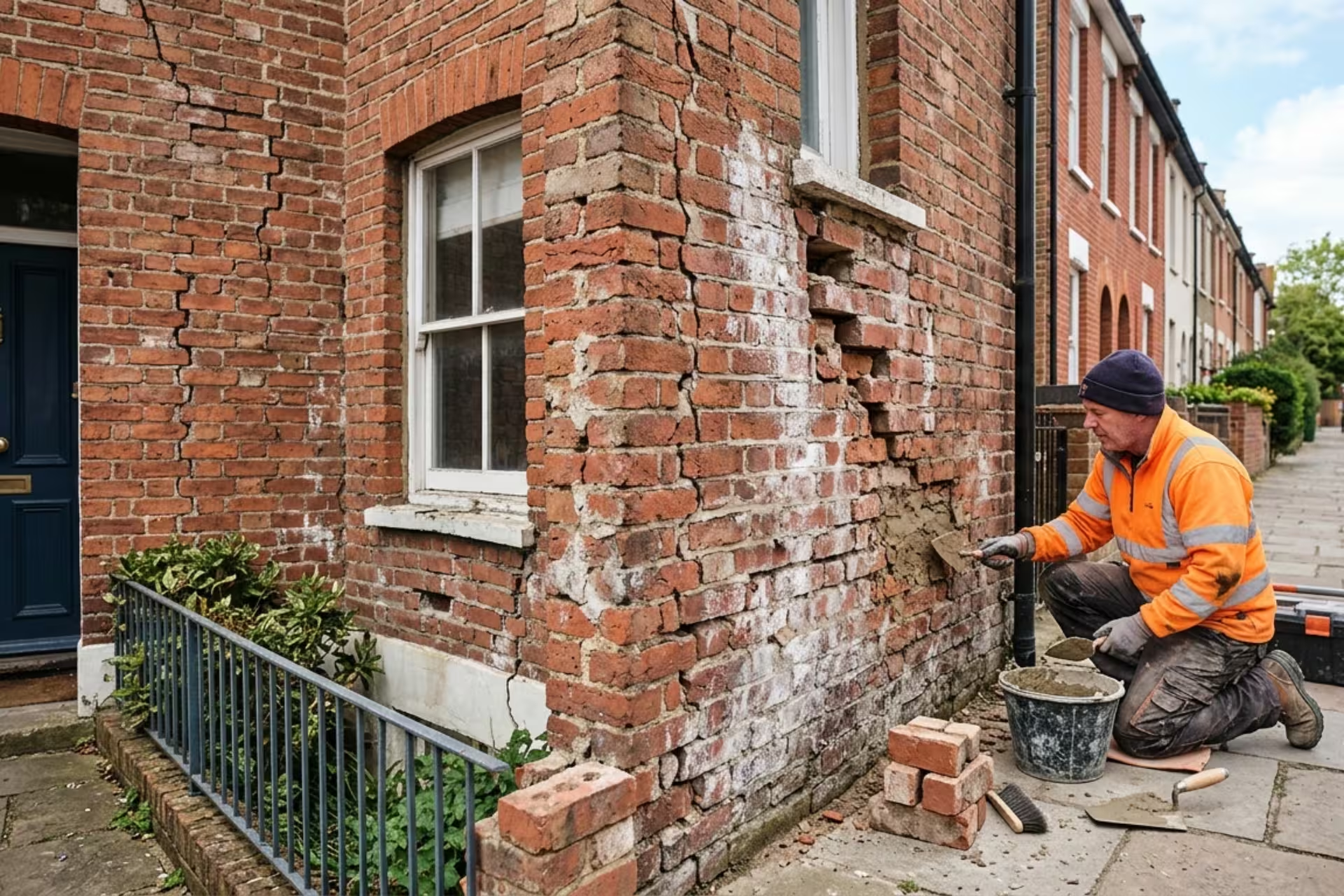
3. Loose or Displaced Chimney Bricks
Bricks can become loose when mortar joints fail, surrounding materials deteriorate or the chimney experiences movement.
A brick that appears displaced may indicate more than ordinary surface wear. Its position and the condition of adjacent masonry should be examined before any repair is attempted.
Loose masonry is particularly concerning at roof level because falling material can endanger people and damage the property below.
4. Cracks Running Through the Chimney Stack
The direction and width of a crack can provide useful information about the problem.
Fine cracks confined to mortar joints may result from weathering or material deterioration. Cracks extending through multiple bricks, widening over time or appearing alongside movement may indicate a more serious structural issue.
A professional should examine significant cracks rather than simply covering them with fresh mortar.
5. Leaning or Distorted Chimney Stacks
A chimney stack that appears to lean or has visibly separated masonry requires prompt attention.
Potential causes include long-term mortar deterioration, structural movement, defective previous work or weaknesses within the stack.
Some older chimneys may have longstanding irregularities, so appearance alone does not establish whether movement is active. The important question is whether the structure remains stable and safe.
6. Deterioration Around Chimney Pots and Flaunching
The upper part of a chimney is particularly exposed to the weather.
Flaunching is the mortar or suitable weather-resistant material surrounding the base of a chimney pot. Its shape helps shed water away from the top of the stack.
If flaunching becomes cracked or detached, water may enter the masonry and the chimney pot may lose support.
Damage in this area should be assessed before the pot becomes loose or unstable.
What Causes Chimney Stack Deterioration?
Chimney damage is rarely caused by a single factor. More often, several conditions contribute to deterioration over time.
Prolonged Exposure to Rainwater
Rainwater can enter through defective mortar joints, cracks, exposed brick faces and damaged flaunching.
When moisture remains trapped within masonry, it can contribute to staining, salt deposits, mortar deterioration and damage to bricks.
Identifying the water-entry point is important because repairing the visible damage without addressing the source may allow the problem to return.
Freeze-Thaw Weathering
Water absorbed by masonry can expand when it freezes. Repeated freezing and thawing may gradually damage vulnerable bricks and mortar.
This type of deterioration can be more pronounced where materials are already porous, cracked or saturated.
Ageing Mortar and Unsuitable Previous Repairs
Mortar naturally experiences weathering over many years, but not every mortar mix is suitable for every property.
Older London brickwork may have been constructed using relatively soft bricks and lime-based mortar. Inappropriate hard cement-rich repairs can sometimes trap moisture or contribute to damage in adjacent softer materials.
Repair materials should therefore be selected according to the existing masonry rather than using one standard mix for every chimney.
Structural Movement and Repeated Stress
Movement in the supporting structure, thermal expansion, previous alterations or weaknesses within the chimney may contribute to cracking or distortion.
A structural crack should not be treated as an ordinary pointing defect until its cause has been assessed.
Lack of Maintenance
Small defects can become more extensive when left unattended.
Open joints, damaged flaunching and isolated broken bricks may expose surrounding materials to additional moisture. Periodic visual checks and timely repairs can help limit further deterioration.
How Chimney Stack Damage Can Affect Your Property
The consequences of a damaged chimney extend beyond its appearance.
Water Penetration and Interior Damp
Moisture entering damaged masonry can migrate through the chimney structure and contribute to damp patches or staining inside the property.
However, not every damp patch near a chimney is caused by damaged bricks. Defective flashing, roofing materials, condensation and other moisture sources may produce similar symptoms.
A proper assessment helps distinguish between these possibilities.
Weakened Masonry and Falling Debris
As joints deteriorate and bricks lose support, sections of masonry can become unstable.
Loose pieces falling from roof height can damage tiles, gutters, vehicles and neighbouring areas, as well as create a risk of injury.
Damage Spreading to Sound Brickwork
Leaving defective joints or broken bricks unrepaired can expose adjoining masonry to further weathering.
Over time, a problem that initially affects a small section may require more extensive work.
Potential Chimney Performance Problems
Structural damage may sometimes occur alongside defects affecting the flue or ventilation.
Where a chimney is used by an active fireplace or heating appliance, any suspected flue damage, smoke leakage or ventilation problem should be checked by an appropriately qualified specialist before further use.
How Professionals Assess a Damaged Chimney Stack
The purpose of a chimney assessment is not simply to identify visible cracks. It is to establish the extent of deterioration, whether the structure remains sound and which repairs are appropriate.
A professional assessment may include the following.
Examining Brickwork and Mortar
The visible condition of the bricks and joints helps establish whether deterioration is localised or widespread.
Attention is given to cracked bricks, open joints, areas of missing mortar and signs of previous repairs.
Checking the Upper Stack
Chimney pots, flaunching and the top courses of brickwork are examined where they can be accessed safely.
These components are particularly vulnerable to prolonged weather exposure.
Investigating Moisture Entry
Where damp or leakage is reported, the surrounding roof junction, flashing and relevant masonry should be considered.
This helps avoid unnecessary repairs to components that may not be responsible for the problem.
Evaluating Structural Stability
Visible movement, significant cracking or displaced brickwork may require further investigation.
The level of assessment depends on the defect. Serious structural concerns may require input from a suitably qualified structural engineer.
Chimney Stack Repair Options Explained
The correct repair depends on the condition of the existing masonry, the cause of deterioration and the extent of the affected area.
Chimney Repointing
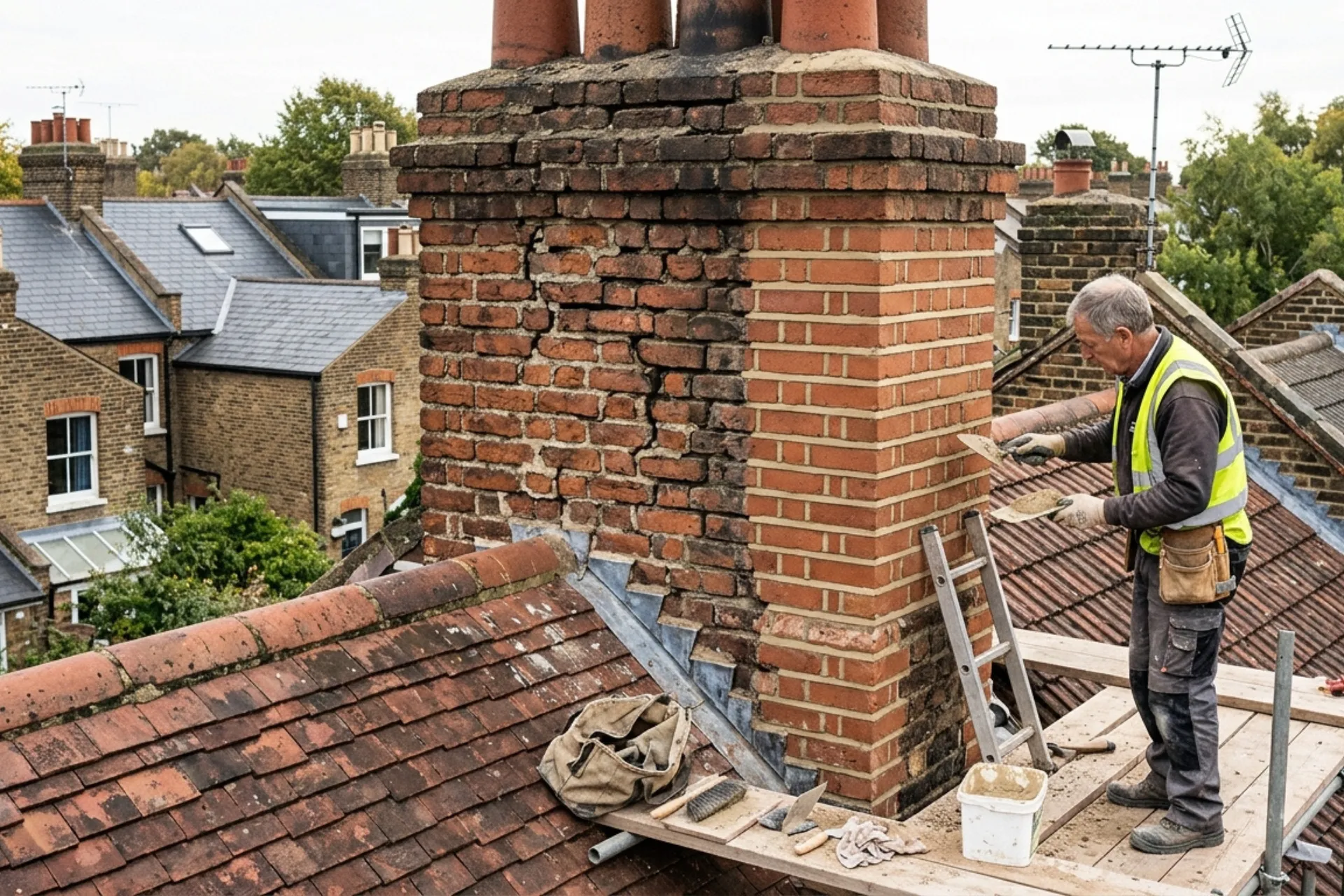
Repointing involves carefully removing defective mortar from joints and replacing it with compatible new mortar.
It is commonly appropriate where mortar deterioration is the main problem and the surrounding bricks remain structurally sound.
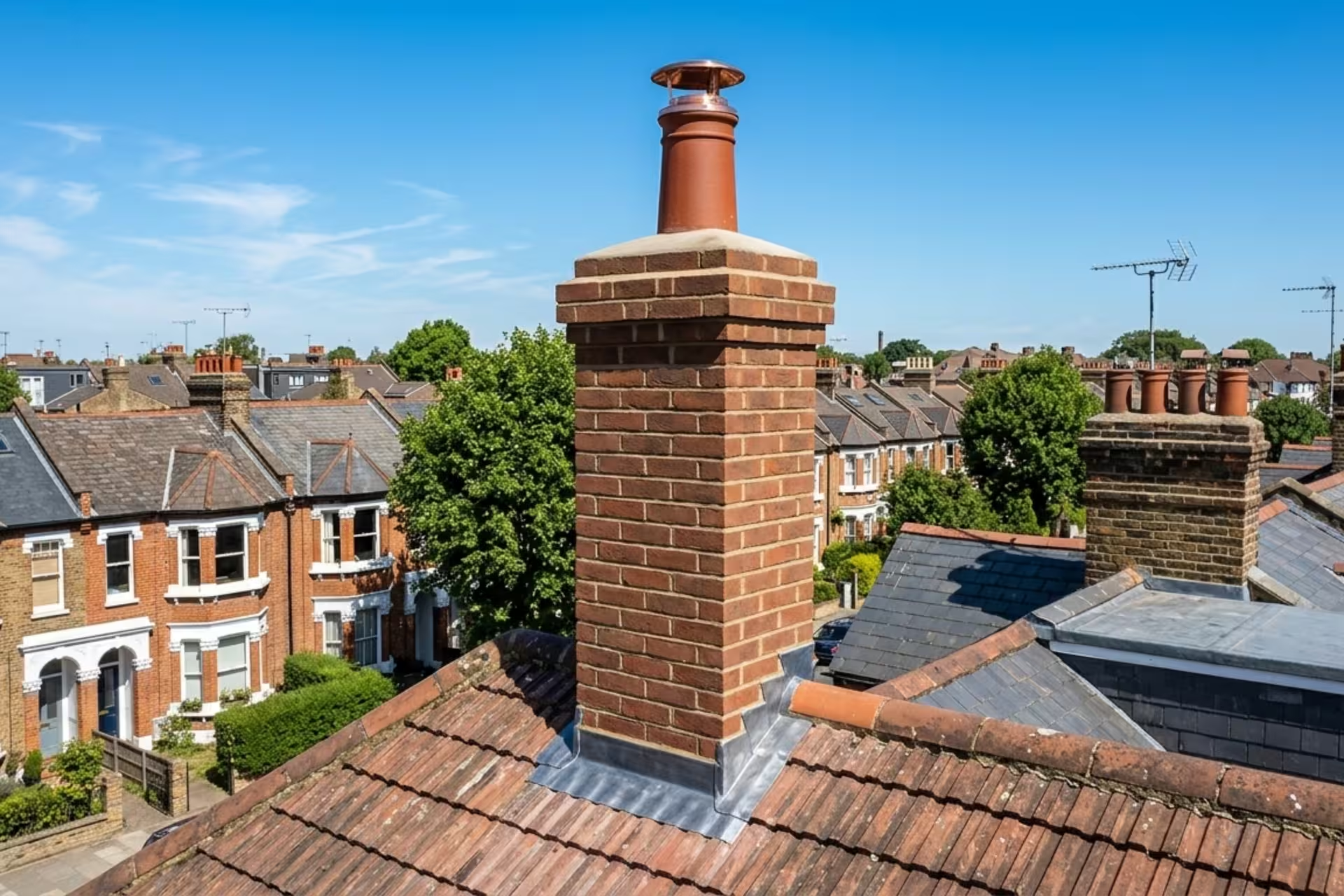
Properly carried out repointing can improve weather resistance while retaining much of the original chimney.
Replacing Damaged Chimney Bricks
When individual bricks have cracked, spalled or become unsuitable for continued use, selective replacement may be possible.
The damaged brick is carefully removed and a suitable replacement is installed using compatible mortar.
For period properties, the replacement should also be considered in relation to the original brick’s size, strength, porosity and appearance.
Repairing Chimney Flaunching
Cracked or deteriorated flaunching may need to be removed and renewed.
The replacement should be appropriately formed to support the chimney pot and help direct rainwater away from vulnerable areas.
Any instability affecting the pot itself must also be addressed.
Localised Chimney Brickwork Repairs
Where deterioration affects a small section of masonry, localised repair or partial reconstruction may be appropriate.
This may involve replacing several bricks, rebuilding a limited course or restoring masonry around a damaged section.
Partial or Full Chimney Rebuilding
When the upper courses have deteriorated significantly, partial rebuilding may be more reliable than repeated patch repairs.
More extensive reconstruction may be needed where the stack has widespread structural defects or is unsafe.
The decision should follow a detailed assessment rather than being based solely on the appearance of damaged mortar.
For a more detailed comparison, read our guide to chimney repair versus chimney rebuilding.
When Is Chimney Repointing Enough, and When Is Rebuilding Necessary?
Chimney repointing may be suitable when the main issue is deteriorated mortar and the existing brickwork remains secure.
Partial rebuilding may be considered if a particular section of the stack has failed but the remaining structure is sound.
A full rebuild may become necessary where structural deterioration is extensive, the chimney is significantly unstable or retaining the existing masonry is no longer appropriate.
The decision is not simply about cost. It should balance structural safety, the remaining useful life of the masonry and whether a repair will address the underlying defect.
What Should You Do If You Notice Chimney Stack Damage?
If you suspect your chimney has deteriorated, begin with observations that can be made safely from the ground.
You can take photographs from a safe position, note visible changes and record when damp patches or falling debris first appeared.
Do not climb onto the roof or attempt to remove loose chimney bricks yourself.
If masonry is falling, the stack is visibly moving or there is an immediate risk to people below, keep the affected area clear and arrange urgent professional assistance.
For less urgent damage, arranging an inspection before further weather exposure can help identify the necessary repairs.
Chimney Stack Problems in Older North London Properties
Many properties across Cricklewood, Hampstead, Highgate, Finchley, Hendon, Willesden and West Hampstead feature traditional brick chimney stacks.
These include Victorian and Edwardian terraces, older semi-detached houses and properties that have undergone extensions or roof alterations.
The age of a chimney does not automatically mean it is defective. However, traditional construction materials, previous repairs and long-term exposure can affect the type of deterioration that develops.
When repairing older chimney stacks, compatibility with the original materials is particularly important.
A sympathetic repair should aim to preserve sound existing brickwork while addressing the cause of the deterioration.
Why Early Chimney Stack Repairs Are Worth Considering
Addressing defects before they spread can offer several practical benefits.
- Protecting existing brickwork: Localised repairs may help prevent moisture from damaging surrounding masonry.
- Reducing unnecessary reconstruction: Sound sections of the original stack can often be retained.
- Improving weather resistance: Suitable repairs can help reduce rainwater penetration.
- Maintaining the property’s appearance: Careful material selection can preserve the character of traditional brickwork.
- Managing safety risks: Identifying loose masonry or structural defects allows the appropriate action to be taken.
Regular checks are particularly useful after severe weather or when an older chimney begins showing new signs of deterioration.
Get Professional Help With Chimney Stack Damage in London
If you’ve noticed damaged chimney bricks, deteriorating mortar, cracks or signs of movement, identifying the cause early can help prevent further problems.
MR Chimney Repairs is a family-run chimney and brickwork specialist based in Cricklewood, North London. Led by Michael Rock, who has more than 35 years of experience in chimney and brickwork services, the company provides practical repairs for older and modern properties.
From chimney repointing and individual brick repairs to flaunching restoration and more extensive chimney rebuilding, the aim is to recommend work appropriate to the condition of your property.
We cover Cricklewood, Hampstead, Finchley, Willesden, Hendon, Golders Green, Highgate, Muswell Hill, West Hampstead and surrounding parts of North London.
Concerned about chimney stack damage?
Contact MR Chimney Repairs to discuss the problem and arrange a professional assessment.
Call: 07751 362934
Email: info@mrchimneyrepairs.co.uk
Explore our chimney repair services or contact us to request a quotation.