Cracked, Loose or Spalled Chimney Bricks: Causes and Repair Options
Chimney bricks are constantly exposed to the elements. Positioned above the roofline, they face heavy rainfall, cold weather, strong winds and repeated temperature changes throughout the year.
Over time, this exposure can cause individual bricks to crack, flake or gradually break apart. In some cases, the damage is limited to the surface. In others, bricks may become loose, allowing moisture into the masonry or affecting the stability of the chimney stack.
If you’ve noticed pieces of brick near your roof, crumbling brick faces or visible cracks in your chimney, you may be wondering whether the damaged bricks can be repaired or need replacing.
The answer depends on the type of damage, its underlying cause and the condition of the surrounding masonry.
This guide explains the differences between cracked, loose and spalled chimney bricks, how these problems develop and which repair methods may be appropriate.
How Can You Tell If Your Chimney Bricks Are Damaged?
Not every mark or uneven brick surface indicates a serious defect. Older chimney bricks naturally show signs of weathering, and some variations in colour or texture are normal.
However, certain changes deserve closer attention.
Common signs of damaged chimney brickwork include:
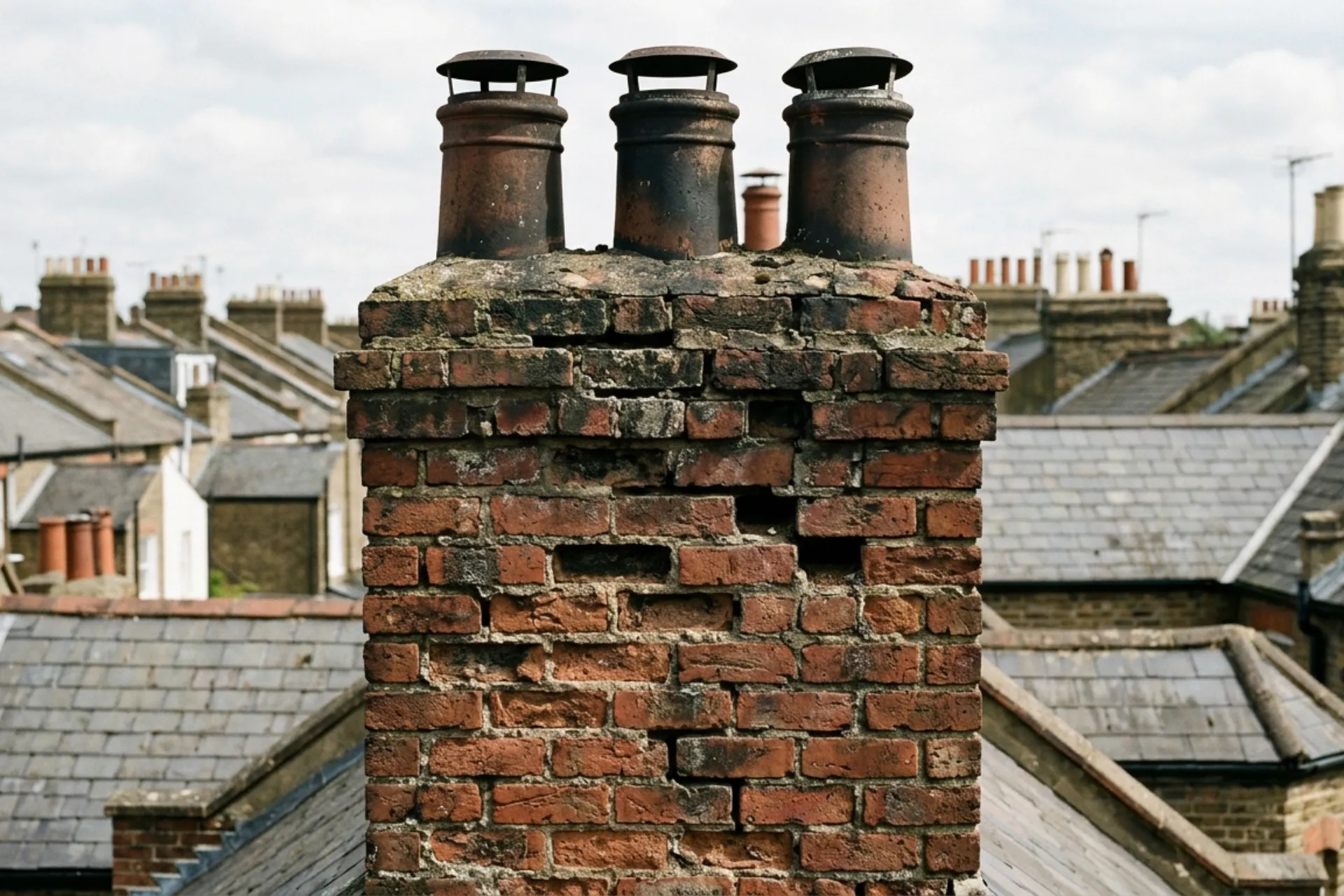
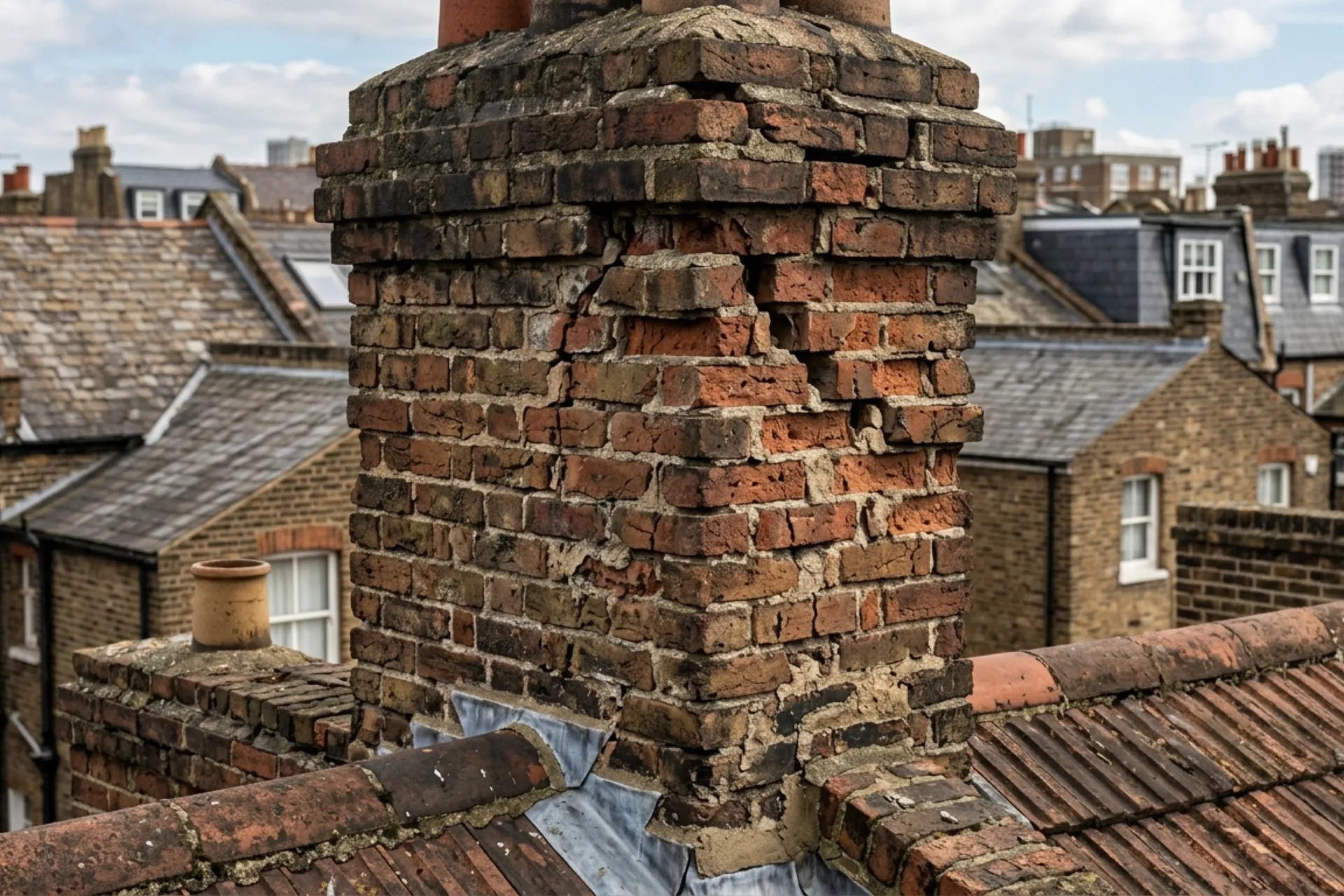
- Cracks running through individual bricks
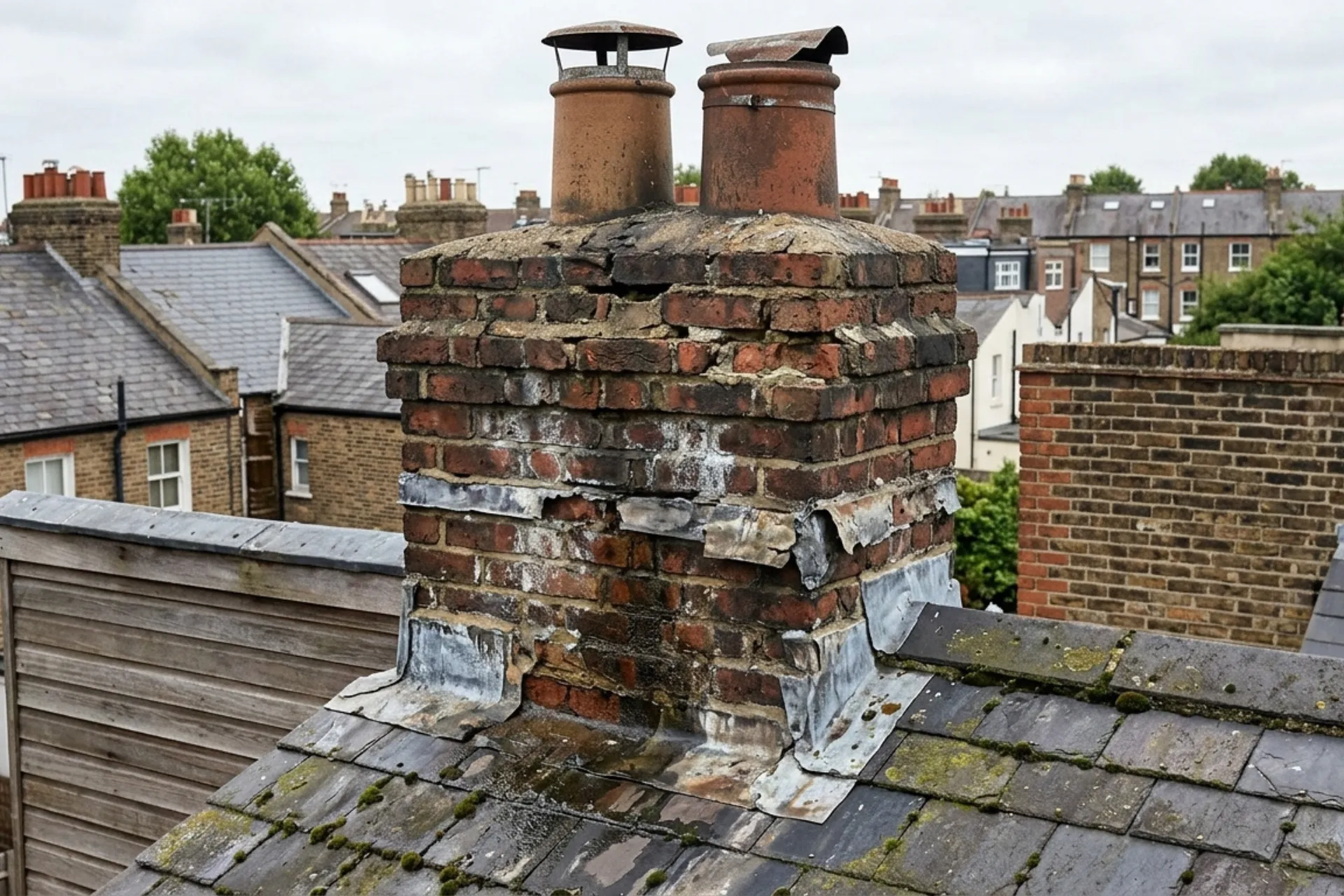
- Brick faces flaking or breaking away
- Loose or displaced bricks near the top of the stack
- Missing brick corners or edges
- Brick fragments collecting on the roof or in gutters
- White deposits appearing alongside moisture damage
- Noticeable gaps around damaged bricks
- Several bricks deteriorating in the same area
- Brick courses appearing uneven or distorted
The number of affected bricks matters, but their position and the condition of the surrounding structure are equally important.
A single damaged brick in an otherwise stable stack may be relatively straightforward to replace. Several loose bricks near the chimney top can present a more immediate safety concern.
Three Common Types of Chimney Brick Damage
Although homeowners often describe damaged bricks as simply “crumbling”, chimney masonry can deteriorate in different ways.
Understanding the difference helps explain why one chimney may need individual brick replacement while another requires more extensive work.
1. Cracked Chimney Bricks
A cracked chimney brick has developed a split or fracture through part or all of its body.
Some cracks are relatively fine and remain localised. Others extend through the brick or appear across several adjacent courses.
Possible causes include moisture-related deterioration, structural movement, thermal stresses, previous physical damage and weaknesses in the original brick.
A crack through an individual brick does not automatically mean the entire chimney is structurally unsafe.
However, cracks extending across several bricks, widening over time or appearing alongside displacement require closer investigation.
What homeowners may notice: A visible line through the brick face, a separated corner or a crack continuing into the surrounding masonry.
2. Loose or Displaced Chimney Bricks
Loose chimney bricks are a different concern because the brick may no longer be adequately supported by the surrounding masonry.
This can happen when mortar joints deteriorate, adjacent bricks become damaged or movement affects part of the chimney stack.
Sometimes a brick appears slightly proud of the surrounding surface. In more advanced cases, individual bricks may visibly shift or become detached.
Loose bricks are particularly concerning on tall chimney stacks because falling masonry can damage property or injure people below.
What homeowners may notice: Uneven brick alignment, visible gaps, detached mortar or bricks appearing to move out of position.
3. Spalled Chimney Bricks
Spalling occurs when the outer face of a brick begins to peel, flake or break away.
Instead of a clear crack, the brick surface may appear rough, uneven or partially missing.
A common contributing factor is moisture entering the brick and weakening the material during repeated freezing and thawing.
Salt crystallisation and unsuitable repair materials can also contribute to surface deterioration in some circumstances.
Spalling is more than a cosmetic problem when significant portions of the brick face have been lost.
What homeowners may notice: Flaking surfaces, crumbling brick faces, missing outer layers or loose fragments beneath the chimney.
What Causes Chimney Bricks to Crack, Loosen or Spall?
Different forms of brick damage can have overlapping causes. A professional assessment should look beyond the visible defect to establish why it developed.
Moisture Absorption and Repeated Wetting
Brick is a porous building material, although the amount of water it absorbs varies with its composition and condition.
Rainwater can enter through cracks, defective mortar joints and exposed surfaces.
When moisture remains within the masonry, it can contribute to gradual deterioration and increase vulnerability to frost damage.
Chimneys are especially exposed because they project above the roof and receive wind-driven rain from different directions.
Freeze-Thaw Damage
When water trapped in vulnerable brickwork freezes, the pressure created by ice formation can damage the material.
Repeated cycles may weaken the brick surface until pieces begin to break away.
This is one possible explanation for spalling, especially where bricks are already saturated or weathered.
However, not every spalled brick is caused solely by frost. The moisture source and condition of the original brick should also be investigated.
Deteriorated Mortar Joints
Mortar helps support individual bricks and forms part of the chimney’s weather-resistant masonry construction.
When joints become deeply eroded or missing, surrounding bricks may lose support and become more exposed to moisture.
In some situations, mortar deterioration is the primary problem. In others, deteriorating bricks and mortar occur together.
Read our related guide on why mortar crumbles between chimney bricks for a closer look at joint deterioration.
Incompatible Mortar Used During Previous Repairs
Older London chimneys may contain relatively soft bricks and traditional lime-based mortar.
Replacing this mortar with an excessively hard or dense modern mix can sometimes create incompatibility between the brick and joint materials.
Moisture may be less able to escape through the mortar, while stresses can become concentrated in the softer brickwork.
This may contribute to damaged brick faces or edges.
The appropriate mortar should be selected according to the original brickwork rather than automatically using the strongest available mix.
Movement Within the Chimney Stack
Structural movement can cause bricks to crack, shift or separate.
Possible contributors include deterioration of supporting masonry, changes to the building, thermal movement and other structural defects.
A pattern of cracking across several bricks or courses can be more concerning than an isolated weathered brick.
When significant movement is suspected, the cause must be established before cosmetic repairs are carried out.
Previous Repairs That Failed to Address the Cause
Replacing a damaged brick without understanding why it failed may produce only a temporary improvement.
For example, new brickwork may deteriorate again if rainwater continues to enter through a defective chimney-top detail.
Similarly, covering damaged brick faces with unsuitable materials may conceal deterioration rather than stop it.
Successful masonry repairs should address both the defective material and the conditions contributing to its failure.
Why Chimney Bricks Often Deteriorate Near the Top of the Stack
The upper chimney courses are among the most exposed masonry areas on a house.
They receive direct rainfall and are close to chimney pots, flaunching and other components that help protect the chimney top.
If the flaunching becomes cracked or detached, water may enter vulnerable areas of the upper stack.
Similarly, existing defects in the upper mortar joints can allow repeated moisture penetration.
As a result, brick deterioration may be more pronounced near the top even when the lower chimney courses remain relatively sound.
A repair assessment should consider the condition of the upper stack and its weatherproofing details rather than concentrating only on the visibly broken bricks.
Is a Cracked Chimney Brick Dangerous?
The risk depends on the crack’s position, extent and relationship to the surrounding masonry.
A single cracked brick in a stable chimney may be repairable without major reconstruction.
However, certain signs deserve prompt attention:
- Cracks extending through multiple adjacent bricks
- Noticeable movement or separation between courses
- Several loose bricks near the chimney top
- Falling masonry fragments
- A chimney stack visibly leaning or changing alignment
- Cracks accompanied by significant mortar loss
These conditions may indicate wider deterioration or structural instability.
If bricks are falling or the stack appears unstable, keep people away from the affected area and arrange urgent professional assessment.
Do not attempt to remove or reposition loose chimney bricks from the roof yourself.
Can Individual Damaged Chimney Bricks Be Replaced?
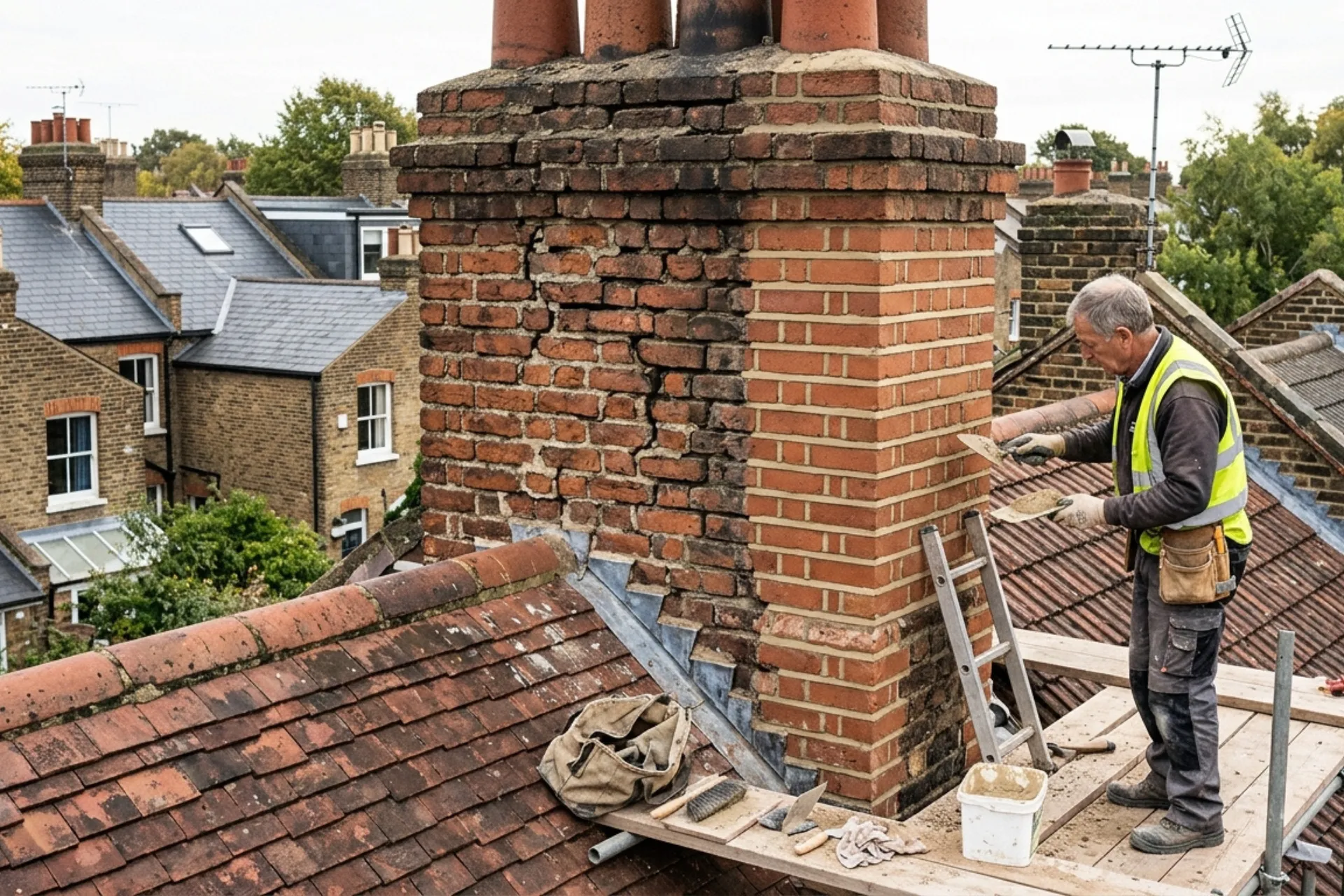
Yes. Individual chimney bricks can often be replaced when the surrounding masonry remains sound and the structure is stable.
Selective replacement allows damaged materials to be removed while preserving the original brickwork wherever practical.
However, not every cracked or spalled brick automatically requires replacement.
A specialist should consider the remaining condition of the brick, how much material has been lost and whether the defect affects the performance of the stack.
How Individual Brick Replacement Generally Works
A suitable repair approach may involve:
- Establishing safe access and identifying the affected masonry.
- Checking the surrounding brickwork and mortar joints.
- Carefully removing the defective brick without unnecessarily damaging neighbouring units.
- Selecting a suitable replacement with compatible dimensions and physical properties.
- Installing the replacement using mortar appropriate to the existing masonry.
- Finishing the surrounding joints and checking the completed repair.
The exact method varies according to the position of the brick, chimney construction and extent of deterioration.
Where multiple bricks are unstable, a wider repair strategy may be necessary.
Why Matching Replacement Bricks Matters
Replacing a chimney brick is not simply a matter of selecting another brick with a similar colour.
A suitable replacement should be considered in relation to:
- Size and dimensions
- Compressive strength appropriate to the existing construction
- Water absorption and durability
- Texture and surface finish
- Colour and appearance
- Compatibility with surrounding brickwork and mortar
Using a substantially different or inappropriate brick can affect how the repaired section responds to moisture and weather exposure.
For traditional London chimneys, careful material selection also helps retain the property’s original appearance.
Exact visual matching may not always be possible, especially on weathered historic brickwork, but suitable compatibility should remain the priority.
Can Spalled Chimney Bricks Be Repaired Without Replacing Them?
Sometimes limited surface deterioration can be monitored or addressed through appropriate specialist conservation repairs.
However, bricks with extensive loss of their outer face, significant cracking or substantial deterioration may need replacing.
Applying ordinary mortar or a surface coating over severely damaged brickwork is not necessarily a durable solution.
The repair should take account of how much sound material remains and whether the underlying moisture problem has been resolved.
In older masonry, retaining historic material can be desirable, but it should not compromise the safety or stability of the chimney.
The decision should follow an assessment of the brick’s condition and the structure around it.
Brick Replacement vs Chimney Repointing: What’s the Difference?
Brick replacement and repointing are related masonry repairs, but they address different defects.
| Repair method | Main purpose |
|---|---|
| Chimney brick replacement | Removes and replaces bricks that are unsuitable for continued use |
| Chimney repointing | Renews defective mortar joints between bricks |
| Combined brick and mortar repairs | Addresses deteriorated bricks and joints within the same section |
| Partial chimney rebuilding | Reconstructs a section where existing masonry cannot be retained safely |
If the bricks remain sound and only the mortar is deteriorating, repointing may be sufficient.
If individual bricks are damaged, those bricks may need replacing even where the surrounding mortar is relatively sound.
When both materials have deteriorated, combined repairs are often necessary.
The correct approach should be based on the actual defect rather than using the terms interchangeably.
When Does Chimney Brick Damage Require Partial Rebuilding?
Individual brick replacement may not be appropriate where a substantial portion of the stack has become unstable.
Partial chimney rebuilding may be considered when several courses of brickwork have deteriorated, extensive cracking has developed or the upper stack no longer provides reliable support.
For example, damage concentrated in the upper courses might be addressed by carefully dismantling and reconstructing the affected section, provided the remaining structure is sound.
More extensive structural defects may require a different approach and possibly a structural engineer’s assessment.
The important distinction is whether the existing masonry can be repaired safely and reliably.
How Professionals Assess Chimney Brick Damage
A professional inspection should determine the extent of the damage and the likely cause before recommending repairs.
Inspecting the Visible Brick Faces
The specialist examines cracked, flaking and missing brick surfaces to understand the pattern and distribution of damage.
Checking Brick Alignment
Any displacement, leaning or irregular movement is considered in relation to the surrounding stack.
Examining Mortar Joints
The condition of the joints can help establish whether individual bricks have lost support or whether moisture is entering through open gaps.
Assessing the Chimney Top
Flaunching, upper courses and chimney pots may need attention where deterioration is concentrated near the top.
Reviewing Previous Repairs
Existing replacement bricks, pointing and patch repairs may help explain why deterioration has returned.
Establishing the Repair Scope
The final recommendation should distinguish between isolated brick replacement, repointing, combined repairs and reconstruction.
If serious structural movement is suspected, specialist structural advice may be necessary.
What Happens If Damaged Chimney Bricks Are Left Unrepaired?
The consequences depend on the severity of the defects.
Where exposed brick surfaces and open joints allow continuing moisture penetration, surrounding masonry may deteriorate further.
Loose brickwork can also create a falling-debris hazard.
In some cases, damage that could initially have been addressed through selective brick replacement may become more extensive if the underlying cause continues.
However, not every minor surface imperfection requires immediate replacement.
The aim is to identify defects that affect weather resistance, stability or safety and respond appropriately.
Chimney Brick Repairs for Older North London Homes
Traditional brick chimney stacks are a familiar feature of properties throughout Cricklewood, Hampstead, Finchley, Hendon, Willesden, Highgate and surrounding North London areas.
Victorian and Edwardian properties may have chimney brickwork constructed using materials that differ from those found in modern houses.
The original mortar, brick porosity and history of previous repairs can influence how deterioration develops and how it should be addressed.
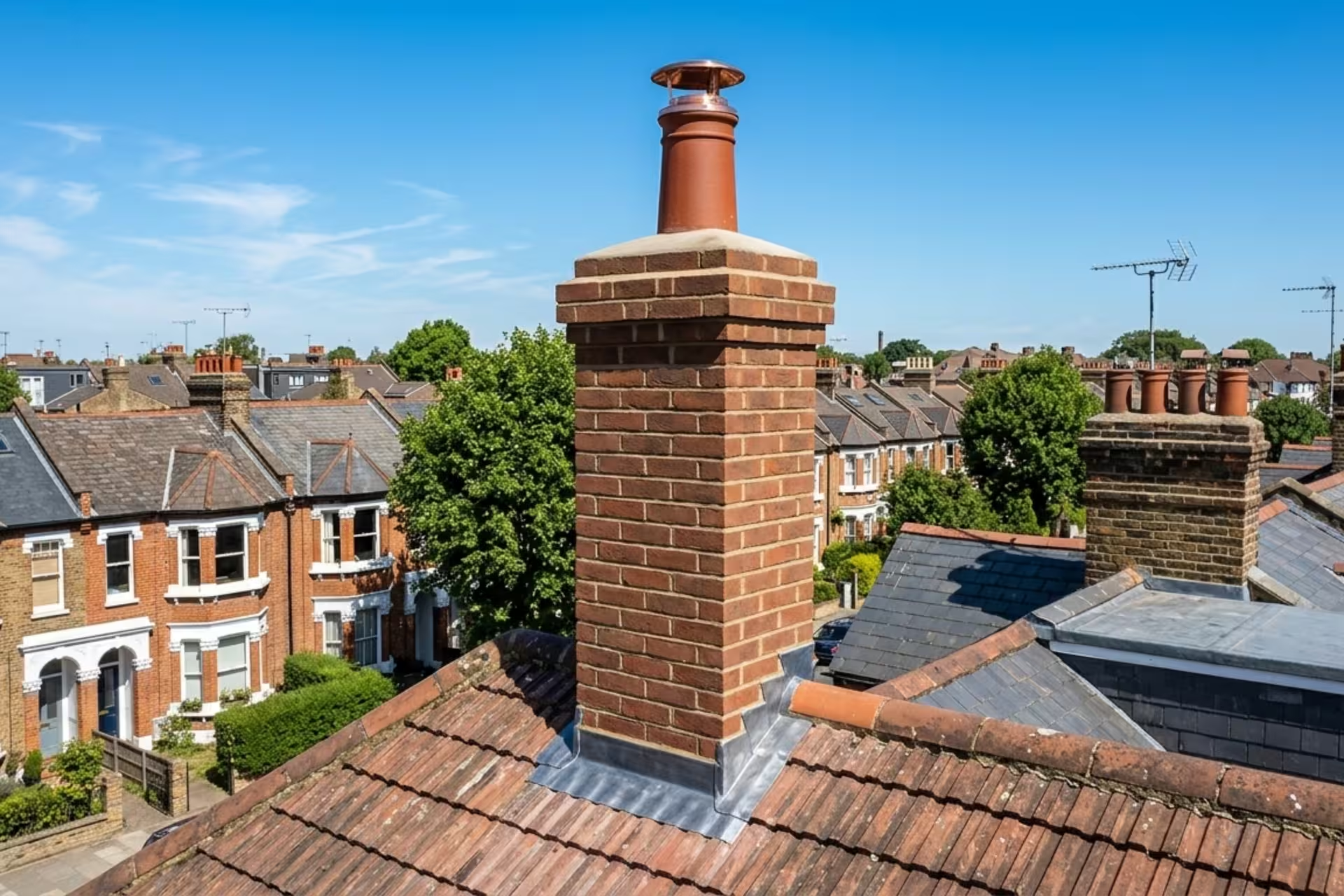
For these properties, sympathetic repairs can help retain sound original masonry while replacing bricks that have deteriorated beyond practical use.
A suitable approach should respect the existing construction without overlooking defects that affect the chimney’s safety.
How to Help Prevent Further Chimney Brick Damage
Although no exposed chimney can be protected completely from weathering, regular observation and appropriate maintenance can help identify developing problems.
Consider the following measures:
- Check the chimney visually from a safe position after severe weather.
- Look for missing brick faces or newly visible cracks.
- Investigate loose or falling mortar before surrounding masonry deteriorates.
- Arrange an assessment where moisture problems repeatedly affect the chimney.
- Avoid unsuitable hard mortar patches on traditional soft brickwork.
- Ask a specialist to examine loose bricks or changes to chimney alignment.
- Address defects in flaunching and other chimney-top details when necessary.
The most effective prevention starts with understanding how the structure is deteriorating and addressing the source of the problem.
Get Professional Chimney Brick Repairs in North London
If you’ve noticed cracked bricks, loose masonry or deteriorating brick faces on your chimney, the next step is to identify the extent of the damage and the most suitable repair.
MR Chimney Repairs is a family-run chimney and brickwork company based in Cricklewood, North London.
Led by Michael Rock, who has more than 35 years of experience in chimney and brickwork services, the company provides masonry repairs for traditional and modern properties.
Our work includes replacing damaged bricks, repairing loose chimney brickwork, restoring defective joints and carrying out more extensive chimney repairs where necessary.
We serve homeowners across Cricklewood, Hampstead, Finchley, Hendon, Willesden, West Hampstead, Highgate, Golders Green and surrounding North London areas.
Whether your chimney has one damaged brick or several deteriorated courses, we can discuss the problem and recommend suitable next steps following an assessment.
Need Help With Damaged Chimney Bricks?
Call 07751 362934 or email info@mrchimneyrepairs.co.uk to discuss the condition of your chimney and request a quotation.
Explore our brickwork repairs or chimney repair services.